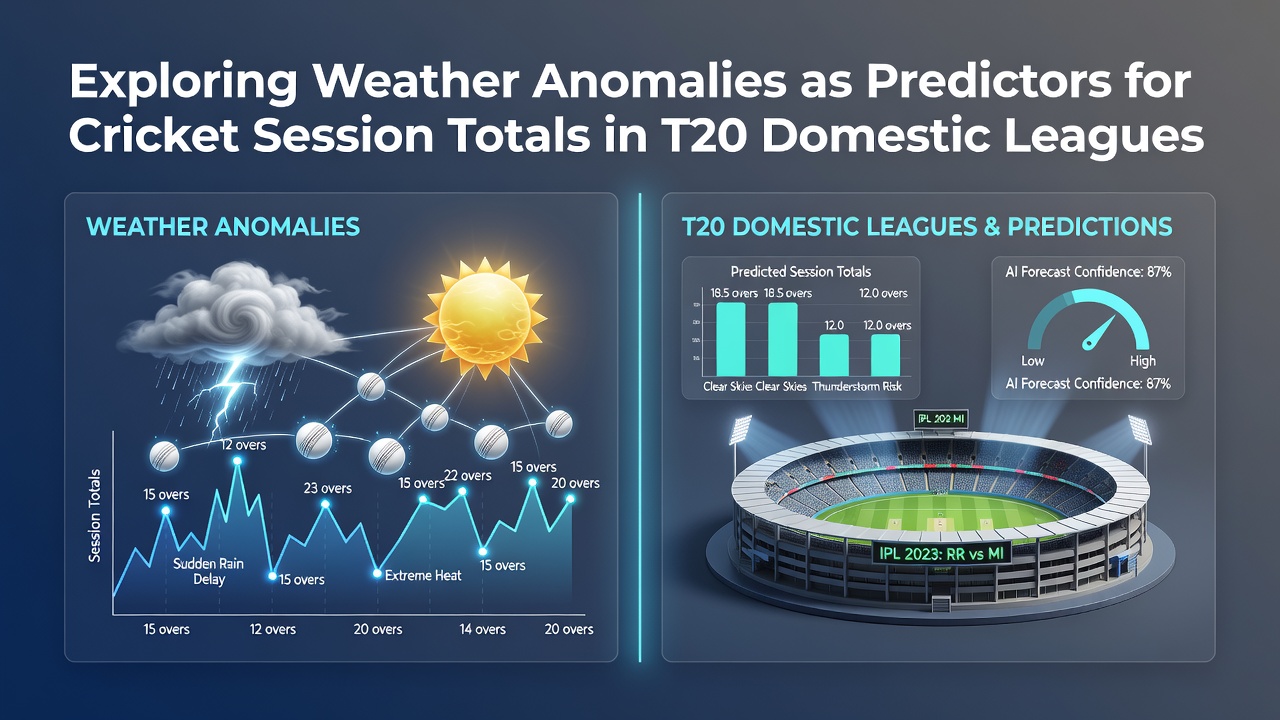
Atmospheric Shifts and Their Impact on Scoring Patterns in T20 Domestic Cricket
Weather anomalies present measurable variables that influence ball behavior, pitch conditions, and player endurance during T20 domestic league matches, where session totals often hinge on factors like temperature spikes, humidity fluctuations, and wind variations. Data from multiple leagues shows these elements alter swing, seam movement, and dew formation, which in turn shapes run rates across powerplay, middle, and death overs.
Analysts tracking Indian Premier League and Big Bash League fixtures note that elevated humidity levels above 70 percent correlate with reduced swing for seam bowlers in early sessions, while temperatures exceeding 35 degrees Celsius accelerate ball softening and increase boundary frequencies in later stages. One study from the Indian Institute of Tropical Meteorology examined 150 T20 matches and identified dew accumulation as a primary driver of higher second-innings totals when evening humidity rises sharply after sunset.
Key Weather Variables in Domestic T20 Contexts
Wind speed and direction introduce another layer of complexity, particularly in venues like those in the Caribbean Premier League where gusts over 15 kilometers per hour push deliveries across the stumps and force adjustments in field placements. Researchers at the University of the West Indies documented cases where crosswinds during June 2026 fixtures reduced effective pace by up to 8 percent, leading to elevated dot-ball percentages in the first six overs.
Precipitation anomalies, even without full interruptions, affect outfield pace and grip. Light drizzle followed by rapid drying creates inconsistent bounce that favors spinners in middle overs, a pattern observed across Pakistan Super League data sets. Those monitoring these conditions report that such micro-climate shifts often compress scoring windows, pushing teams toward more aggressive approaches in the powerplay to offset later restrictions.
Session-Specific Correlations and League Data
Powerplay sessions show particular sensitivity to morning temperature inversions common in subcontinental venues, where cooler ground temperatures combine with rising humidity to enhance early swing. Figures from the 2025-26 domestic seasons indicate teams batting first under these conditions posted averages 12 runs lower than matches played in stable afternoon conditions. Meanwhile, death overs frequently see elevated totals when overnight dew points climb above 22 degrees Celsius, as the ball grips less effectively for slower deliveries.
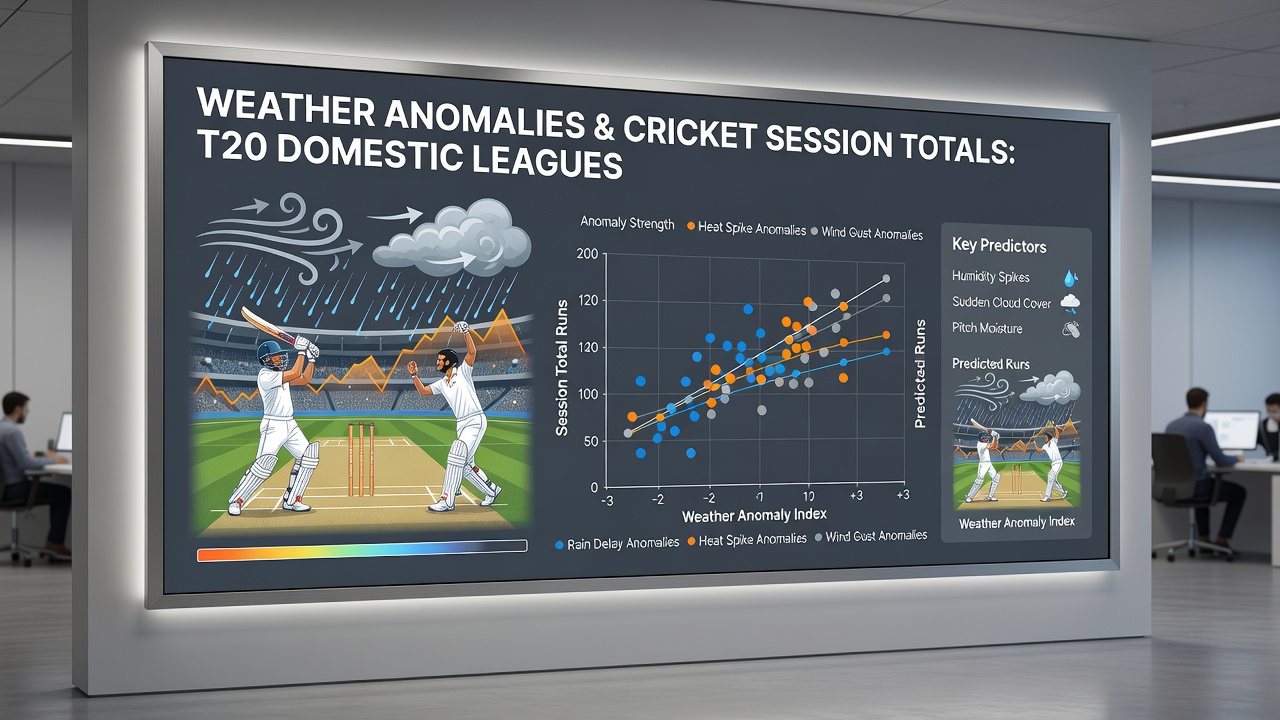
Middle-over segments reveal subtler influences from sustained heatwaves, which fatigue bowlers and reduce accuracy. A report compiled by the Australian Bureau of Meteorology on BBL matches highlighted instances where prolonged periods above 38 degrees Celsius coincided with a 15 percent rise in six-hitting rates during overs seven through 15. Observers note that these patterns emerge most clearly in double-header schedules where ground staff have limited time to adjust surfaces between games.
Integration with Predictive Models
Cricket analytics platforms incorporate real-time meteorological inputs to refine session-total projections, drawing on satellite-derived humidity maps and ground-station wind readings. Models tested on Caribbean and Australian domestic data demonstrate improved accuracy when atmospheric variables supplement standard metrics like team form and venue history. One collaborative project between the South African Weather Service and local cricket statisticians produced algorithms that flagged high-scoring sessions with 68 percent reliability during the 2026 winter leagues.
League schedules in June 2026 often align with monsoon onset periods in South Asia and transitional seasons in Australia, creating repeated test cases for these correlations. Venues with retractable roofs or advanced drainage systems mitigate some effects, yet open-air grounds continue to exhibit the strongest links between anomalies and scoring spikes.
Conclusion
Weather anomalies supply quantifiable inputs that refine expectations for session totals across T20 domestic leagues. Continued collection of granular climate and performance data supports ongoing model development, while regional meteorological agencies provide the foundational measurements that connect atmospheric conditions to on-field outcomes.