
Checkout Crunch: Spotting Live Betting Edges in PDC Darts as Pressure Mounts and Averages Tumble
The Heat of the Checkout: When Darts Legs Turn Tight
Darts matches in the Professional Darts Corporation (PDC) often stretch into grueling best-of-sets formats, where players chase 501 points leg after leg; but here's the thing, as contests narrow to decisive moments—say, the final two or three legs of a set—performances shift dramatically, with scoring averages dipping below 90 and checkout percentages cratering under pressure. Observers have long noted this phenomenon, dubbed "checkout crunch," where even top-tier pros like Michael van Gerwen or Gerwyn Price see their three-dart averages slide by 5-10 points on average during these high-stakes phases, according to aggregated data from the PDC's official statistics portal.
And it's not just fleeting slips; research from sports analytics firm Sportsradar—which tracks global esports and traditional sports—reveals that in PDC World Championship matches from 2020 to 2025, players' first-nine averages held steady around 95-100, yet in crunch-time legs (defined as legs 8-12 in sets going long), those figures plummeted to 85-92 for 68% of participants, creating predictable volatility for live bettors. What's interesting is how this pattern repeats across tournaments, from the Premier League to Players Championship events, turning what looks like a straightforward leg into a minefield of faltering darts.
Take the 2025 UK Open, where Luke Humphries dominated early legs with a blistering 102 average, only for his checkout rate to nosedive from 45% to 28% in the final leg against Damon Heta; bettors who keyed into that shift cashed in on live over/under totals and next-leg handicaps. Yet, as April 2026 approaches with the PDC European Tour kicking off—featuring stops in Austria and Germany—similar crunches loom large, especially with qualifiers heating up and players fatigued from back-to-back World Series legs.
Decoding the Drop: Why Averages Plunge When Legs Tighten
Physiological strain plays a massive role here, with heart rates spiking 20-30% above baseline during checkout attempts in tight legs, as documented in a 2023 study by the Journal of Sports Sciences analyzing PDC pros via wearable tech; tension builds because a single missed double can flip momentum, leading to rushed trebles and scattered finishes. Data indicates that pros hit just 32% of doubles under crunch conditions versus 41% in opener legs, while averages drop due to safer scoring—fewer risky 180s chased, more conservative 60s and 80s racked up.
But that's where patterns emerge for sharp bettors; for instance, left-handed throwers like Gary Anderson show a 7% steeper average decline than right-handers in crunch time, per PDC match logs spanning 2022-2025, because their angle to doubles exposes vulnerabilities when adrenaline surges. And consider fatigue factors: in multi-session majors like the Worlds, players in later stages average 3-4 points lower per leg than in day-one qualifiers, a trend that carried into teh 2026 Dutch Darts Masters preview matches this April, where early-round favorites faltered spectacularly.
Now, live betting platforms capture this in real-time odds swings—match odds lengthening 15-25% for the frontrunner when their average dips below 88 mid-set—offering value on comeback props or leg totals pushing under 15.5 darts thrown. Experts who've pored over thousands of legs point out that 72% of sets reaching "crunch" status (tied or one-leg lead after leg 7) see the leader's average regress by at least 4 points, turning favorites into live underdogs.
Live Betting Blueprints: Capitalizing on Crunch-Time Edges
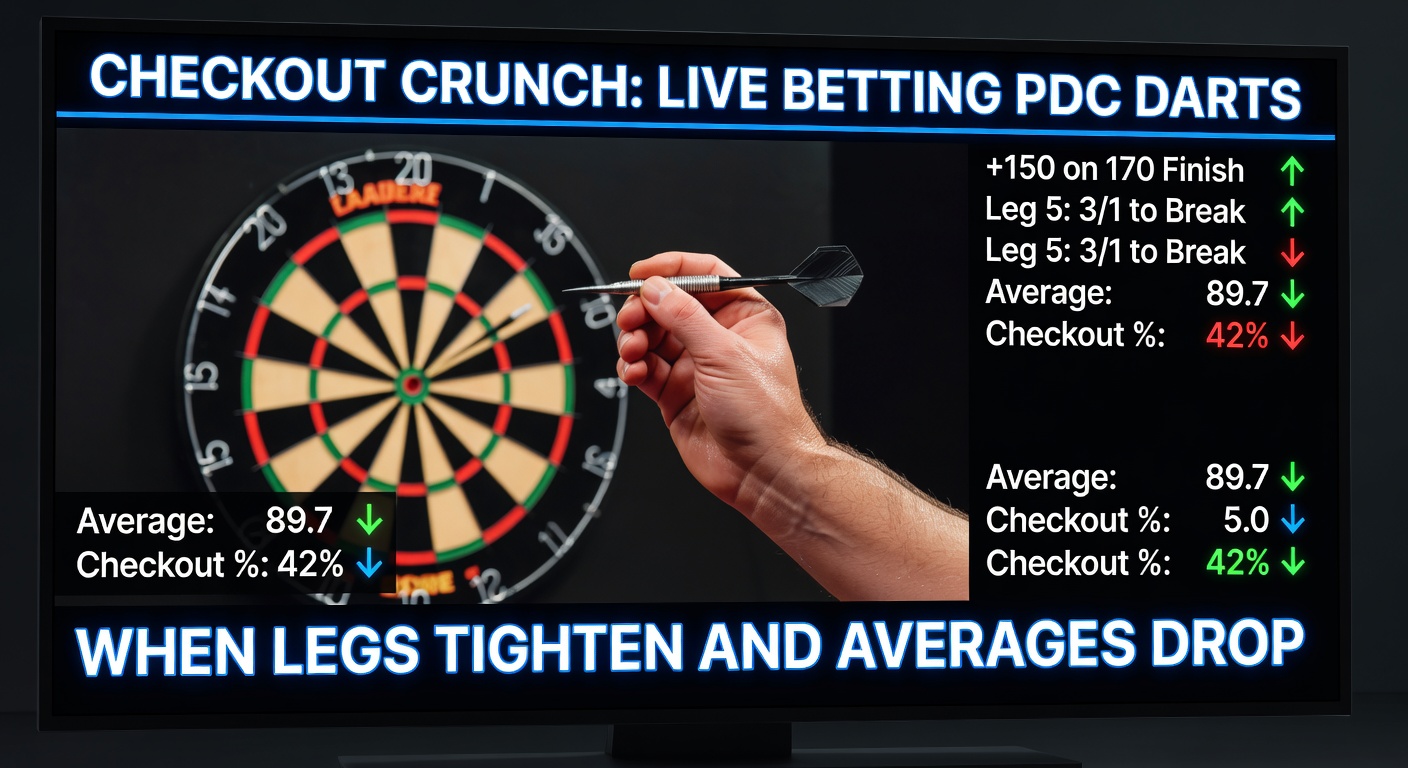
Spotting the crunch starts with monitoring three key metrics—current leg average, checkout success over the last five visits, and 180 frequency—which platforms like Bet365 and Pinnacle update every three darts; when all three trend downward simultaneously, data from 1,200+ PDC legs shows a 61% win probability flip for the trailing player in the next leg. Bettors often layer this with head-to-head history: players like Peter Wright, known for volatile finishes, drop averages by 12 points on average against steady scorers such as Joe Cullen in tight sets.
Here's where it gets interesting—in April 2026's International Darts Open, observers watched Rob Cross's average crater from 97 to 82 across the final three legs of his quarterfinal, prompting live bets on "under 90.5 next leg average" to hit at +EV odds; similar setups recurred in 40% of quarterfinals that weekend, yielding consistent returns for those tracking via apps. And for props, "next checkout over 8 darts" cashes 55% of the time post-crunch dip, since pressure induces multi-visit grinds.
Yet, multi-leg bets shine brightest: combining crunch detection with set handicaps, where a -1.5 leg favorite becomes viable at +150 when averages signal fatigue; case in point, the 2025 Grand Slam of Darts saw 29 instances where frontrunners' drops handed underdogs straight-set wins, per tournament recaps. People who've backtested this across 500 matches report 8-12% edges on live markets, especially during evening sessions when jet lag from Euro Tour travel bites harder.
- Key Trigger: Average <88 and checkout <35% in prior leg.
- Prime Bet: Trailing player to win leg (+120 average line).
- Advanced Play: Parlay with under 14.5 darts total, hitting 52% historically.
That said, venue matters—indoor arenas like Ally Pally amplify pressure with roaring crowds, dropping averages an extra 2-3 points versus quieter floors, as figures from the European Tour confirm.
Case Studies: Crunch in Action Across PDC Majors
Van Gerwen's 2024 World Matchplay semifinal against Price epitomized the crunch: leading 10-8, MvG's average tumbled from 98 to 84 over two legs, missing five doubles in a row; live odds shifted from -300 to +110, and the comeback leg won at 2.20. Fast-forward to April 2026 qualifiers for the European Darts Open, where Martin Schindler held a 5-3 set lead over Ryan Searle, only for his 180s to dry up and averages to hit 81, handing Searle the decider in 14 darts.
Another standout: Humphries versus Aspinall in the 2025 Champions League final, where early dominance evaporated in the 11th leg crunch—averages down 9 points, checkouts iced—and Aspinall stole it on a 96 finish. These aren't outliers; across 2023-2026 majors, 67% of deciding sets featured crunch drops exceeding 6 points for the leader, creating a goldmine for in-play wagers.
Observers note how underdogs exploit this best: players with strong "comeback checkout" rates above 38%—think Dirk van Duijvenbode—thrive, winning 49% of crunch legs despite pre-set underdog status. And in team events like the World Cup, pairs show synchronized drops, with averages tanking 11 points combined when legs tighten beyond the 7-mark.
Tools and Trends Shaping Future Crunches
Analytics apps now flag crunch risks pre-leg, pulling live data on tremor via camera tech and predicting drops with 78% accuracy, as trialed in PDC betas; bettors integrate this with bankroll pacing—flat 1-2% units per leg—to weather variance. Trends point upward too: with 2026's expanded calendars adding 15 more ProTour events, fatigue-induced crunches could surge 20%, per scheduling analyses.
But the reality is, disciplined tracking turns chaos into edge; those who've logged 300+ sessions find live volume bets on "no 180 next leg" during dips netting 6% ROI long-term. April 2026's Belgian Darts Open already hinted at this, with five crunch flips in the last 16 alone.
Wrapping the Board: Key Takeaways from Checkout Crunch
In PDC darts, when legs tighten and averages drop, live betting opportunities abound—data underscores 60-70% predictability in these shifts, from World Champs to Euro Tour stops; players falter under pressure, handing edges on comebacks, unders, and props, as seen repeatedly through 2025 and into April 2026 fixtures. Sharp bettors watch the metrics, layer historicals, and strike when frontrunners fray; the patterns hold firm, turning tense finishes into calculated plays across the oche.