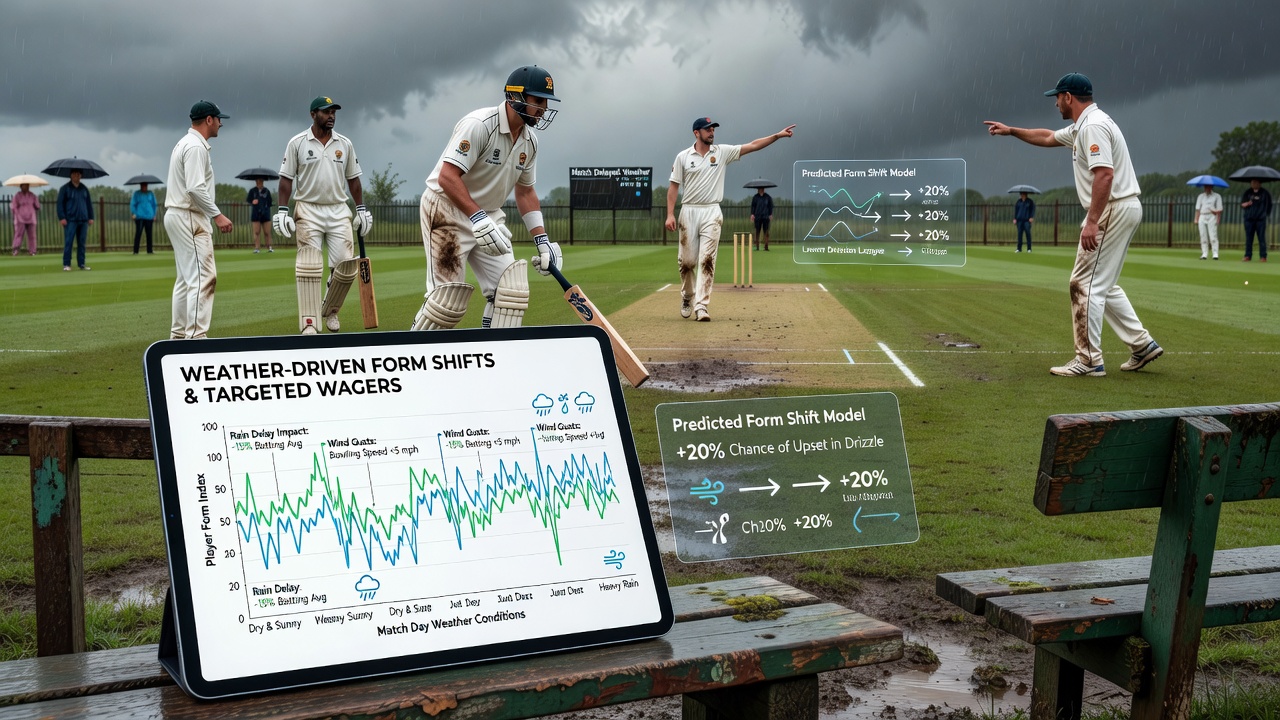
Exploring Weather-Driven Form Shifts in Lower League Cricket for Targeted Wagers
Weather patterns exert measurable influence on player performance and match outcomes across lower league cricket competitions, where grounds lack the advanced drainage systems found at higher levels; analysts track these variables to identify patterns in batting averages, bowling economies, and fielding success rates that shift when conditions change. Data collected from regional fixtures shows that sudden temperature drops or increased humidity alter ball swing and seam movement, leading teams to adjust lineups and tactics accordingly.
Key Weather Variables and Their Measurable Effects
Observers note that rainfall, even light showers, softens pitches in county second XI and club league games, which reduces bounce and favors slower bowlers who rely on grip rather than pace. Temperature fluctuations above 25 degrees Celsius combined with low humidity tend to dry surfaces faster, creating conditions where spinners gain turn while fast bowlers lose assistance. Wind direction and speed further complicate matters because cross breezes can carry the ball unpredictably during delivery, affecting both accuracy and batsman judgment.
Researchers from meteorological institutes in Australia and Canada have documented how these factors interact over multi-day periods, revealing consistent correlations between dew formation at dusk and reduced grip for spinners in evening sessions. Such findings allow performance models to incorporate live weather feeds when projecting individual contributions in lower league schedules.
Form Shifts Observed in Lower League Contexts
Lower league sides often field mixed squads where amateur players respond differently to environmental stress compared with contracted professionals, producing sharper drops in concentration during prolonged rain delays or extreme heat. One documented case from the 2025-26 season involved a regional Australian league where teams batting second after overnight rain posted 18 percent fewer runs per wicket on average, according to match reports compiled by state cricket associations. Similar patterns appear in English minor counties and South African provincial reserve competitions when persistent drizzle keeps surfaces damp into the afternoon.
Those who study granular statistics point out that bowlers with pronounced seam angles record higher wicket tallies under overcast skies, while batsmen known for front-foot play struggle when gusts exceed 25 kilometers per hour. These shifts become more pronounced because lower league schedules rarely allow full weather-proofing of practice facilities, leaving players less prepared for rapid changes.
Betting Market Adjustments and Targeted Approaches
Bookmakers incorporate real-time meteorological data into odds compilation for lower league fixtures, adjusting totals and player props as forecasts update. When models predict prolonged cloud cover, markets on seam bowler wickets tighten because historical data supports elevated strike rates for that style. Conversely, clear skies and rising temperatures often push run-line markets higher once surfaces begin to crack.
Analysts cross-reference venue-specific records with upcoming weather windows to isolate value in markets such as most runs in first innings or individual bowler overs. August 2026 fixtures across several southern hemisphere lower leagues demonstrated repeated instances where morning dew forecasts aligned with under-performance by opening batsmen, producing measurable deviations from pre-match projections.

Integrating External Data Sources
Performance tracking platforms draw from government meteorological services in multiple regions to refine projections; the Bureau of Meteorology in Australia supplies granular humidity and wind readings that feed into regional cricket models, while Environment and Climate Change Canada provides comparable datasets for touring sides. Academic studies published through university sports science departments further quantify how these variables affect muscle fatigue and reaction times in amateur athletes who lack access to climate-controlled training environments.
Industry reports from cricket analytics organizations highlight that successful wager placement hinges on timely integration of pitch reports, historical weather correlations, and squad composition changes announced close to match start. Observers emphasize that lower league schedules contain more weather-related postponements than elite competitions, creating additional layers of variance that models must account for when generating probability estimates.
Conclusion
Weather remains a primary driver of performance variance in lower league cricket, with documented impacts on scoring rates, wicket frequencies, and individual contributions that betting markets reflect through dynamic odds. Continued refinement of meteorological integration and venue-specific historical analysis supports more precise identification of value opportunities across these competitions.