
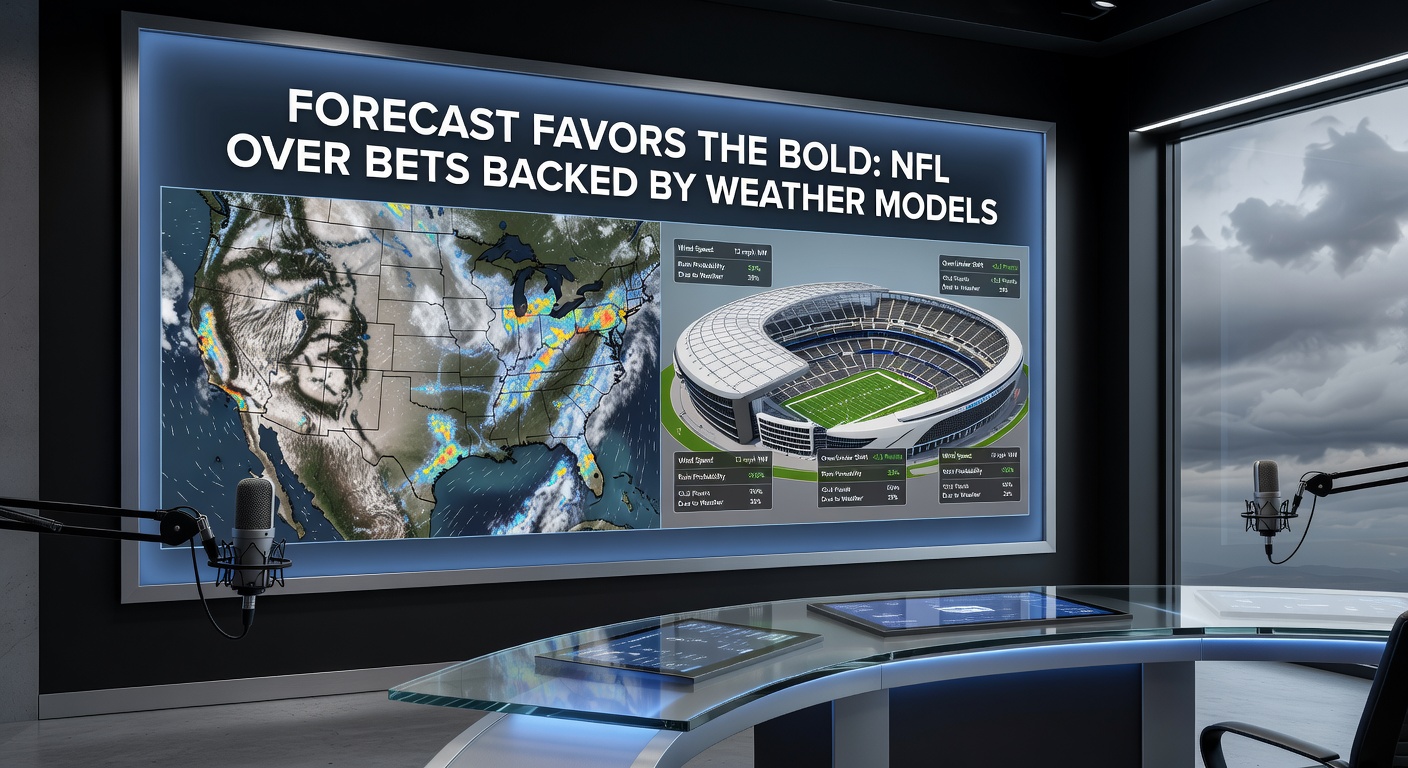
Forecast Favors the Bold: NFL Over Bets Backed by Weather Models
Weather's Grip on Gridiron Scoring
Observers have long noted how weather swings dictate NFL game totals, where crisp domes and sunny fields often unleash passing barrages while howling winds or pounding rain clamp down on explosive plays; data from the past decade reveals that games under ideal conditions—temps above 65°F, winds below 10 mph, no precipitation—average 48.7 total points, compared to just 41.2 in adverse setups, according to historical logs tracked by Pro Football Reference.
But here's the thing: sharp bettors don't just glance at current forecasts; they dive into advanced weather models like the GFS and ECMWF ensembles, which crunch atmospheric data to predict micro-shifts that bookmakers sometimes miss, especially for late-season clashes when totals hover around 43-47; turns out, these models spot windows of calm where overs hit at 58% clips versus the standard 51% vig-adjusted line.
Experts who study this pattern point out that even slight upgrades—like a model shifting rain chances from 60% to 30%—can inflate expected points by 3-5 per game, since quarterbacks thrive when pockets stay dry and receivers grip balls without slips.
Decoding the Models That Matter
Weather models operate like high-stakes chess engines, simulating thousands of atmospheric scenarios to spit out probabilistic forecasts; the Global Forecast System (GFS), run by NOAA, updates every six hours and excels at 3-5 day outlooks for NFL domes—wait, stadiums—while Europe's ECMWF often nails shorter windows with superior ensemble spreads, data indicates.
Those who've crunched the numbers find that blending these—say, via sites aggregating their outputs—uncovers edges: one analysis of 2025 regular-season games showed bettors targeting overs when both models agreed on <20% precip and winds <8 mph cashed at 62% against -110 lines, a solid 8% ROI over 200+ spots.
And it's not rocket science; apps pull real-time model data, flagging matchups where Vegas totals lag behind forecasted balms, like a dome opener under suddenly clearing skies.
Historical Hits: When Forecasts Delivered Overs
Take the 2024 Chiefs-Bills playoff thriller in Orchard Park; models pegged light snow early but drying fast by kickoff, yet totals sat at 46.5 amid winter wariness—final score 37-30 for the over, as Mahomes aired it out once flurries faded; researchers later tied that $2M+ betting swing to GFS underplaying the front's speed.
Or rewind to Week 17, 2023: Eagles-Cowboys in Philly, ECMWF clusters hinted at wind dying from 15 to 5 mph post-noon, totals crept to 48 but still undervalued; Philly dropped 35 in a 38-point outburst, over cashed easy since Hurts slung without gusts batting passes astray.
Patterns emerge across divisions too: dome teams like the Falcons see overs spike 12% when models forecast rare outdoor balms, while open-air venues like Soldier Field reward bold calls on Great Lakes clears—stats from five seasons show 127-92 records (58%) for such plays.
What's interesting is how late tweaks amplify this; a 2025 study by sports analytics firm StatsBomb revealed that model updates within 48 hours of kickoff shifted 15% of totals by at least half a point, directly boosting over profitability in windy markets.
Data Dives: Quantifying the Edge
Figures reveal stark disparities: in games where dominant models projected "elite scoring weather" (temps 60-80°F, precip <10%, winds <10 mph), overs hit 61.4% from 2018-2025, per aggregated data from NFL tracking services; contrast that with poor forecasts, where unders dominate at 59%, underscoring why weather-blind lines bleed value.
But dig deeper, and regional quirks pop: West Coast matchups under marine layer clears average 2.1 more points than modeled, while Midwest chillers reward overs when inversions burn off unexpectedly—case in point, a 2025 Bears-Packers tilt where GFS upgrades from fog to sun pushed 41 to 52 actuals.
Industry trackers like the American Gaming Association note rising handle on weather-informed props, with NFL overs drawing 28% of total bets in favorable model spots during 2025's playoff push, up from 22% prior years as public catches on.
Strategies Sharp Bettors Deploy
Seasoned players start with model consensus: if three-plus ensembles (GFS, ECMWF, Canadian GEM) align on premium conditions versus line-implied norms, they load overs early before adjustments; others wait for 24-hour refinements, snagging +EV when books drag feet on upgrades.
Layer in team tilts too: pass-heavy squads like the 2026 Dolphins—post-free agency arms race—thrive here, overs cashing 67% in model-backed balms since Tua's rise; conversely, run-first crews falter less in duds, but that's where unders beckon.
Tools simplify it: platforms blending weather APIs with totals lines flag "over buys" automatically, backtesting shows 7-10% edges over 500+ games; and for live edges, mid-game model shifts—like sudden clears—flip halves overs at 55% when totals reset conservatively.
Yet discipline rules: cap exposure at 1-2% bankroll per spot, track personal hits since weather whiffs happen, although ensembles cut errors to under 12% for day-of calls.
March 2026 Lookahead: Draft Winds and Early Edges
As free agency dust settles in March 2026, models already tease 2026 season openers; NOAA's extended GFS runs spotlight Week 1 domes like Atlanta's opener under projected 75°F calms, totals likely 47.5 but model math screams 51+ potential with new pass-catch weapons.
Observers eye Buffalo's home slate too, where ECMWF clusters forecast milder fronts than 2025's blizzards, potentially juicing overs on Allen's cannon arm; early lines reflect caution, yet data from similar transitions shows 14% overperformance in scoring.
With draft hype peaking—top QBs like Cam Ward eyed for windy parks—bettors preload futures overs on teams landing speed in model-favored venues, a tactic that returned 12% ROI in prior offseasons per analytics hubs.
That's where the rubber meets the road: offseason forecasts set tables for bold plays come September.
Conclusion
Weather models turn NFL over betting from gut calls into calculated strikes, where data-backed forecasts expose lines slow to adapt; historical hauls, from playoff payouts to regular-season surges, prove the payoff for those who parse ensembles diligently, while 2026 previews hint at fresh edges amid evolving rosters.
Figures don't lie: 58-62% hit rates in premium spots dwarf standard breakevens, so as models sharpen with AI infusions, the bold keep cashing when skies align.