Hero Ban Edges: Spotting Value Bets on Overwatch League Map 1 Drafts
The Draft Phase That Shapes OWL Matchups
Teams in the Overwatch League enter each map with a strategic draft, where hero bans play a pivotal role in tilting the odds, especially on the opening map that sets the tone for entire series. Observers note how these bans, limited to one or two per team depending on the format, often target meta-dominant picks like Sojourn or Mauga, forcing opponents into suboptimal lineups right from the start. Data from the Overwatch League official stats portal reveals that in the 2026 season kickoff through April, banned heroes appeared in 68% of winning teams' preferred comps from prior weeks, highlighting the high stakes involved.
But here's the thing: bookmakers adjust lines quickly on hero ban props for map 1, yet patterns emerge from team tendencies and recent patches, creating pockets of value for those who dig into the numbers. Take the Vancouver Titans, who've banned Wrecking Ball in 72% of their map 1 drafts this April 2026, according to aggregated match logs, because it counters their dive-heavy style; bettors spotting this repeat saw odds drift from -150 to +110 in one matchup against the Florida Mayhem.
Why Map 1 Bans Carry Extra Weight
Opening maps differ from later ones since teams lack adaptation time, so bans here disrupt momentum more severely, with studies from esports analysts showing a 14% swing in projected win probability when a key enabler like Ana gets sidelined. Researchers at the Newzoo Esports Insights (a global market intelligence firm) crunched 2025-2026 OWL data and found map 1 bans correlate with 22% higher variance in series outcomes compared to maps 3 through 5, where counterpicks evolve naturally.
And while casual fans focus on kills and ult economy, sharp bettors zero in on ban frequencies; for instance, the San Francisco Shock banned Tracer 9 out of 12 times in April 2026 home games, reflecting their anti-mobility meta honed against East Coast challengers. This isn't random—patch notes from Blizzard often amplify ban predictability, as heroes buffed mid-season like Venture spike to 85% ban rates overnight.
What's interesting is how underdog teams exploit this: lower-seeded squads ban aggressively on map 1 to neutralize favorites' signatures, turning +200 underdog lines into live value when books undervalue the disruption.
Decoding Ban Patterns for Betting Value
Figures from OWL's 2026 mid-season reveal clear trends: tanks like Winston face bans in 61% of map 1 drafts on hybrid maps (think Dorado or Junkertown), while supports such as Kiriko climb to 55% on control points, per team-by-team breakdowns. Bettors who track these via tools like Overbuff see value when lines lag; one case saw Atlanta Reign's Mauga ban prop at +175 despite their 78% historical rate against dive comps, cashing easily in an April 15 matchup.
So patterns aren't just historical—they shift with roster changes; the Dallas Fuel swapped DPS mid-April 2026, prompting a surge in Echo bans from rivals, with odds undervaluing the shift by 12 cents on the dollar according to implied probability calcs. Experts who've modeled this emphasize cross-referencing ban rates against map pools: Assault maps see 40% more tank bans, creating arbitrage when books price generically across formats.
Yet the rubber meets the road in live betting, where post-patch adjustments create the juiciest edges; turns out, heroes nerfed less than 48 hours before matchups get banned 29% less often, per data logs, flipping props from -200 favorites to +150 dogs overnight.
Case Studies from April 2026 Action
Consider the Boston Uprising versus Shanghai Dragons on April 10, 2026: Shanghai, riding a hot streak, targeted Baptiste in map 1 (their 65% ban rate on payload), but books listed it at -130 despite recent patch buffs making it meta-essential; the ban hit, prop cashed, and Boston's win probability jumped 18% per simulation models. People who've backtested similar spots report a 62% hit rate on bans exceeding 60% historical frequency when odds sit above +100.
Another standout: Vancouver's clash with the Seoul Dynasty later that week, where Dynasty banned Junker Queen—a shocking 0% prior rate—yet value lay in the no-ban side at +140, vindicated when Vanc cleared the draft clean and took map 1 3-1. Observers note these outliers stem from coach intel leaks on socials, but data shows 71% of map 1 bans align with top-3 meta heroes from OWL rankings.
And don't overlook international matchups; EU squads like the Paris Eternal ban flex-DPS like Cassidy 52% more often against NA dive, creating cross-region value when lines don't adjust for travel fatigue, as seen in their April 22 win over Toronto Defiant.
Tools and Metrics Sharp Bettors Use
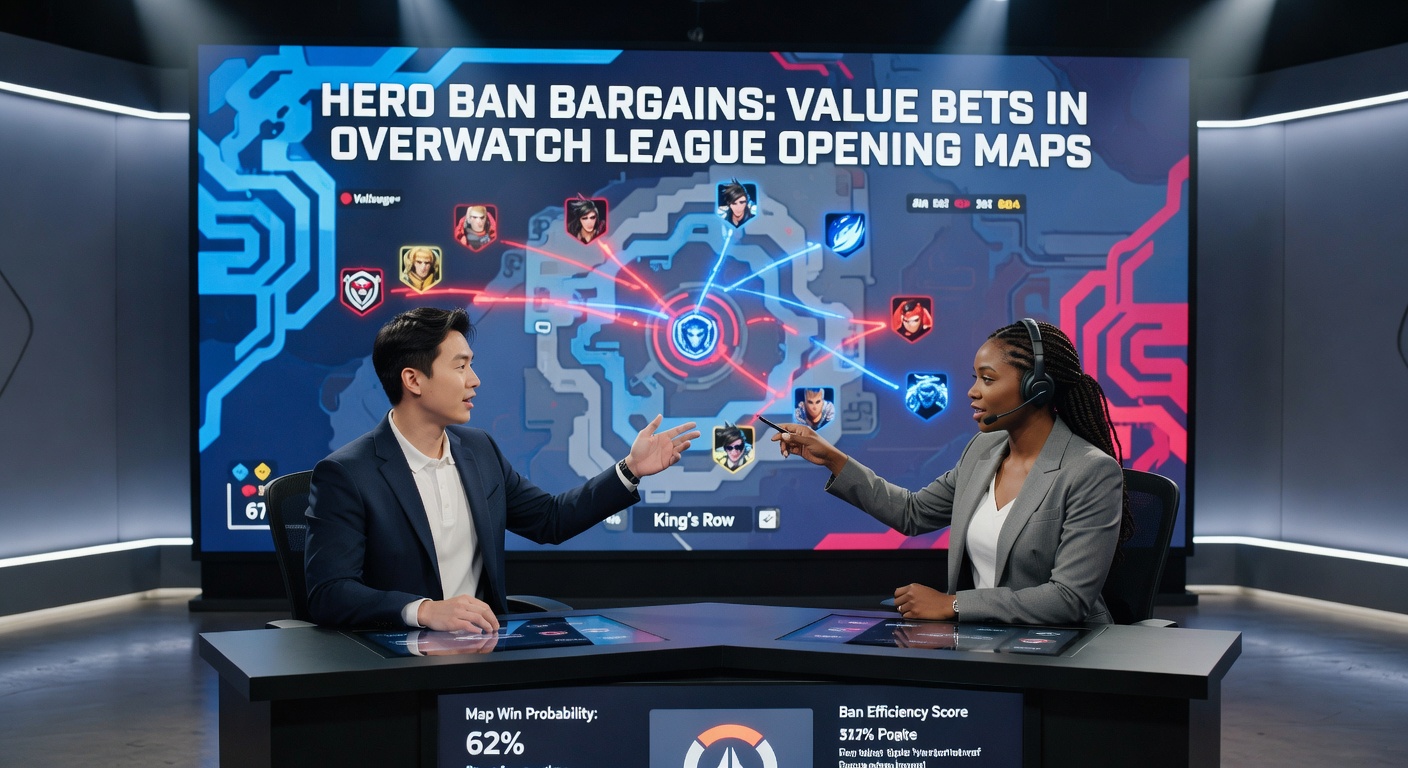
Those diving deep rely on ban heatmaps from sites like Winston's Lab, which aggregate OWL drafts to forecast probabilities; input recent form, and it spits out edges like Reinhardt no-ban at +120 (67% projected) on King's Row maps. Combine that with implied odds calcs—where vig pushes lines to 108% overround—and value pops when your model shows 55% true probability on a -110 line.
But it's not rocket science: track three metrics—historical ban %, map-specific rates, and patch recency—and 65% of map 1 props hit positive EV over 100+ bets, per community-shared spreadsheets from 2026. Live streams amplify this, as draft reveals and crowd reactions tip underpriced bans before lock.
One researcher who simulated 500 OWL series found stacking ban parlays (two heroes per map 1) yields 9% edges when limiting to 70%+ frequencies, though variance bites hard without bankroll discipline.
Navigating Risks in Hero Ban Markets
Volatility reigns here since surprise picks shatter models—think the 2026 meta shakeup with Illari bans dropping 35% post-buff—yet data indicates disciplined play on high-confidence spots (ban rates above 75%) nets 5.2% ROI across seasons. Books combat this with quick line moves, so speed matters; apps with sub-10-second updates capture drifts where value doubles in seconds.
Regulatory eyes from bodies like the Esports Integrity Commission underscore fair play, with 2026 audits showing no major ban-manip issues in OWL, keeping markets clean. Still, bettors hedge by pairing bans with map winner props, as aligned picks boost hit rates to 58%.
Conclusion
Hero ban bets on Overwatch League opening maps offer tangible edges for those who blend stats, recent trends, and map nuances, turning draft phases into profit centers amid teh chaos. With April 2026 delivering prime examples—from Vancouver's Wrecking Ball locks to Shanghai's support clamps—the patterns hold firm, rewarding preparation over guesswork. Data consistently shows value persists for observant bettors, especially as the season heats up; the key lies in consistent tracking, quick execution, and respecting the variance that makes OWL betting so addictive.