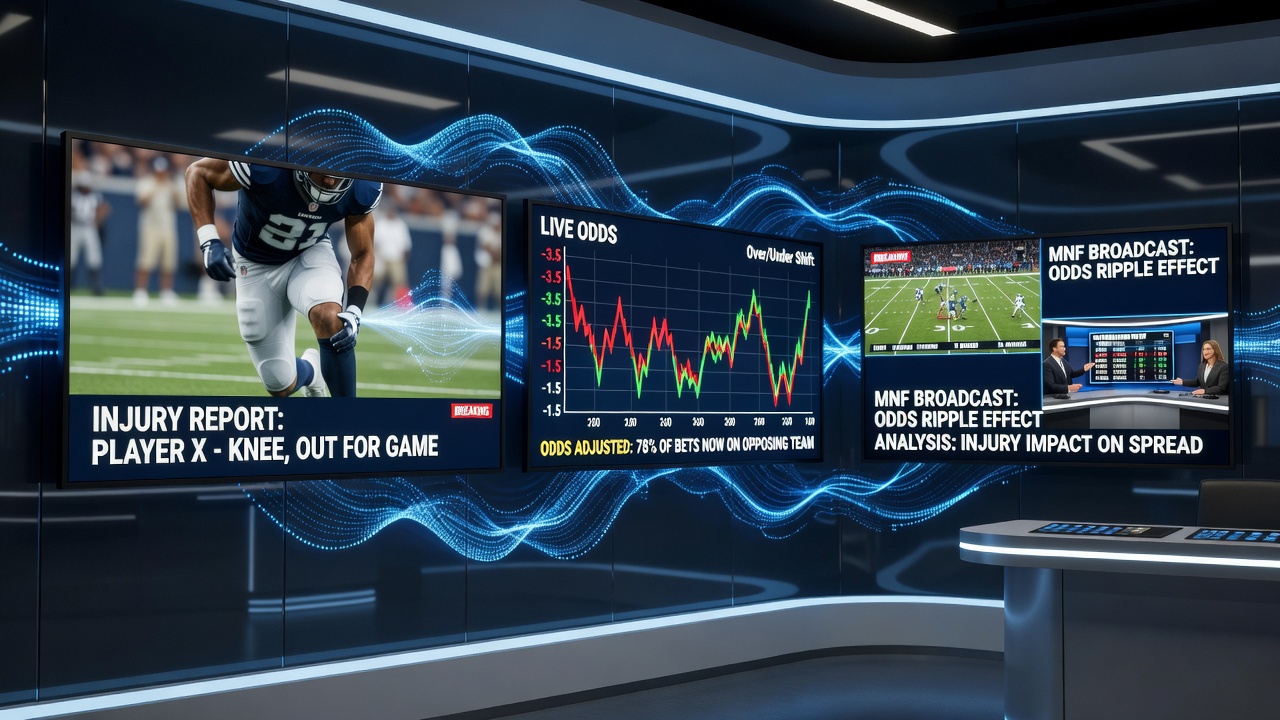
Injury Reports Triggering Swift Shifts in Monday Night Football Live Betting Markets
Live betting markets during Monday Night Football respond immediately when injury reports surface, with odds on spreads, totals, and player props adjusting within seconds as data reaches oddsmakers and bettors alike. The NFL schedule places these prime-time games under intense scrutiny, where a single update about a quarterback's status or a defensive lineman's availability can alter expected outcomes across multiple wager types at once.
How Real-Time Data Flows Into Odds During Broadcasts
Broadcasters deliver injury updates through sideline reporters and official league channels, while betting platforms integrate these feeds directly into their systems; operators monitor multiple sources simultaneously because delays of even thirty seconds can create imbalances in the market. Data shows that when a starting running back exits with a lower-body issue, the total points line often drops by half a point or more within the first minute of confirmation, and this pattern repeats across dozens of games each season according to historical tracking from sports analytics firms.
Position-Specific Effects on Different Bet Categories
Quarterback injuries produce the largest swings because passing volume drives both team totals and individual player props, whereas offensive line injuries tend to affect rushing attempts and sack-related markets more gradually. Observers note that wide receiver absences frequently push over/under lines downward on the game total while simultaneously boosting the opposing team's implied win probability in moneyline markets. Research from sports performance databases indicates these position-based variations follow consistent statistical relationships across multiple NFL seasons, allowing models to predict the magnitude of movement once the nature of the injury becomes clear.
Trainers and medical staff submit updates at standardized intervals during games, yet the timing of public disclosure still creates windows where sharp bettors act faster than recreational participants. When an ankle injury to a key defensive player is announced during the second quarter, live spreads typically shift by three points or greater before the next commercial break ends, and this speed of adjustment has increased as automated pricing engines incorporate natural language processing on official tweets and broadcast audio.
Technology Driving Faster Market Reactions
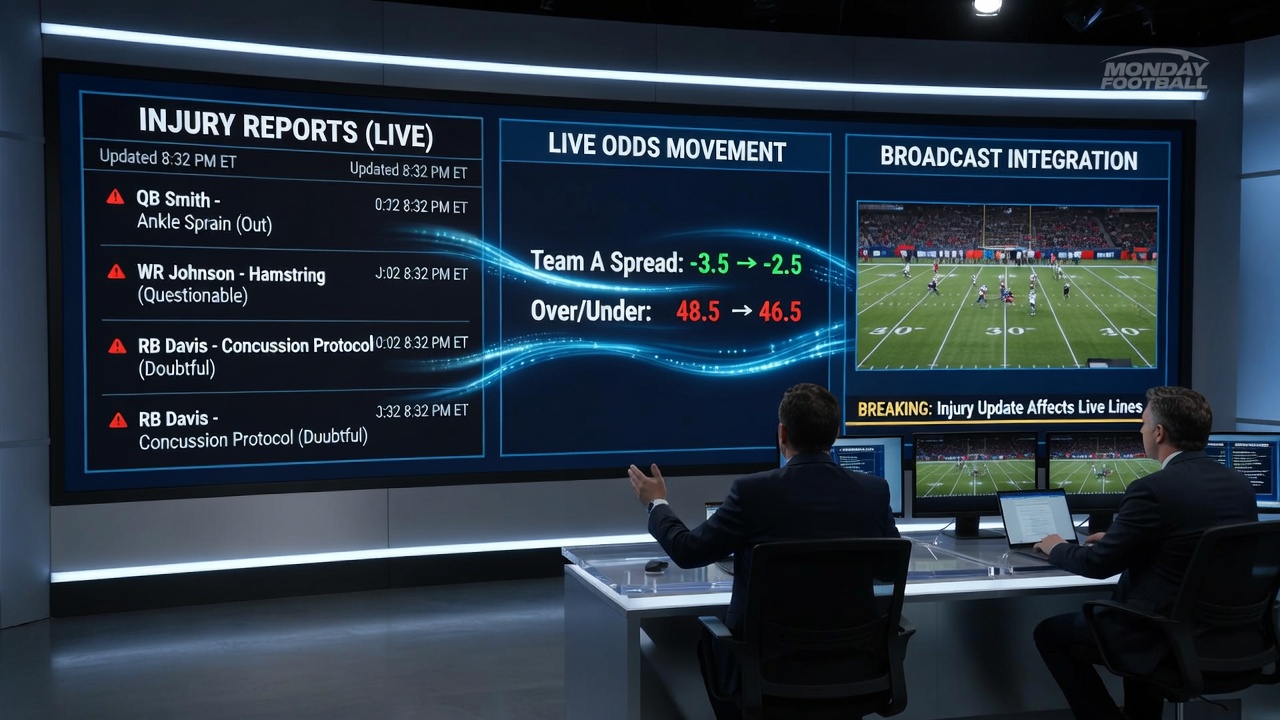
Modern sportsbooks deploy algorithms that scan multiple data streams including league injury reports, team social media accounts, and broadcast commentary, then recalculate probabilities across hundreds of micro-markets simultaneously. These systems became more sophisticated ahead of the 2026 season, with several operators reporting reduced latency between announcement and price change. A study released by the University of Nevada, Las Vegas gaming research center found that average adjustment time for major injury news dropped below eight seconds in the 2025 season compared with twenty-two seconds three years earlier.
Player prop markets react with particular sensitivity because individual statistics depend directly on participation; when a tight end exits early, his receiving yardage line is immediately removed or heavily shaded, while correlated markets such as quarterback completions to that position also move. Those who track these correlations across multiple weeks often discover predictable follow-on effects in the backup player's emerging prop lines once the initial wave of activity settles.
Case Examples From Recent Broadcasts
One notable sequence unfolded when a star cornerback was ruled out at halftime of a late-season Monday night matchup, causing the visiting team's implied total to rise by nearly four points while defensive player props for the opposing side saw immediate demand. Another instance involved a backup quarterback entering during the first quarter after the starter suffered a concussion protocol exit, which triggered cascading adjustments across first-half totals, passing yardage props, and even the game moneyline within ninety seconds.
These patterns appear consistently in tracking data compiled by the American Gaming Association, which documents how injury-related volatility contributes to elevated handle during primetime windows. Canadian regulatory filings from provincial gaming corporations show similar spikes in cross-border betting activity when high-profile Monday night injuries occur, confirming the international reach of these market movements.
Conclusion
Injury reports during Monday Night Football continue to serve as primary catalysts for live odds movement because they directly alter expected performance metrics across multiple statistical categories at once. The combination of broadcast timing, automated pricing technology, and position-specific correlations produces rapid, measurable shifts that betting platforms and participants must account for in real time. Data from multiple seasons demonstrates that markets stabilize once the full extent of an injury becomes clear, yet the initial wave of adjustments remains a defining feature of these prime-time broadcasts.