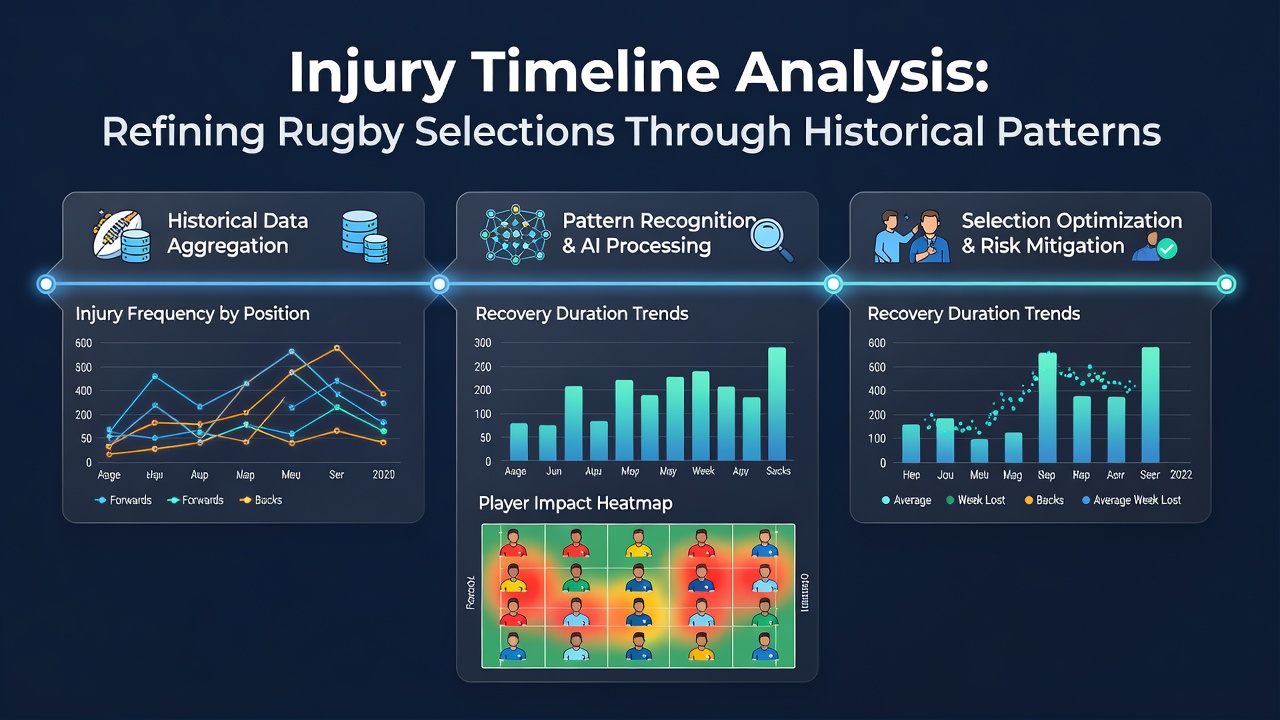
Injury Timeline Analysis: Refining Rugby Selections Through Historical Patterns
Analysts in rugby have turned to detailed injury timeline reviews to sharpen player selection decisions, drawing on records that span multiple seasons and competitions around the world. Data from professional leagues shows that certain injury types follow predictable recovery windows, allowing teams to map availability with greater precision during squad planning cycles.
Core Elements of Timeline Tracking
Medical teams compile statistics on common rugby injuries including concussions, ligament tears, and muscle strains, noting average return-to-play durations that range from two weeks for minor hamstring issues to six months or longer for anterior cruciate ligament ruptures. These figures come from aggregated reports issued by organizations such as the Sports Injury Bulletin and national rugby federations, which track thousands of cases annually. Observers note that patterns emerge most clearly when data sets cover at least five consecutive years, revealing seasonal spikes tied to fixture congestion or weather conditions in different regions.
Selectors use these timelines to forecast gaps in key positions, particularly in the back row and midfield where physical contact occurs at high frequency. Research from Australian sports institutes indicates that players with prior shoulder instability face elevated risks during the July pre-season period, prompting adjustments in training loads before major tours begin.
Historical Data Sources and Methodologies
Databases maintained by World Rugby and affiliated unions provide the foundation for timeline models, incorporating variables such as player age, position, and previous injury history. Studies conducted at universities in New Zealand and South Africa have applied machine learning techniques to these records, identifying clusters where soft-tissue injuries recur within specific windows after return. The approach relies on objective metrics like GPS workload data and medical imaging results rather than subjective assessments alone.
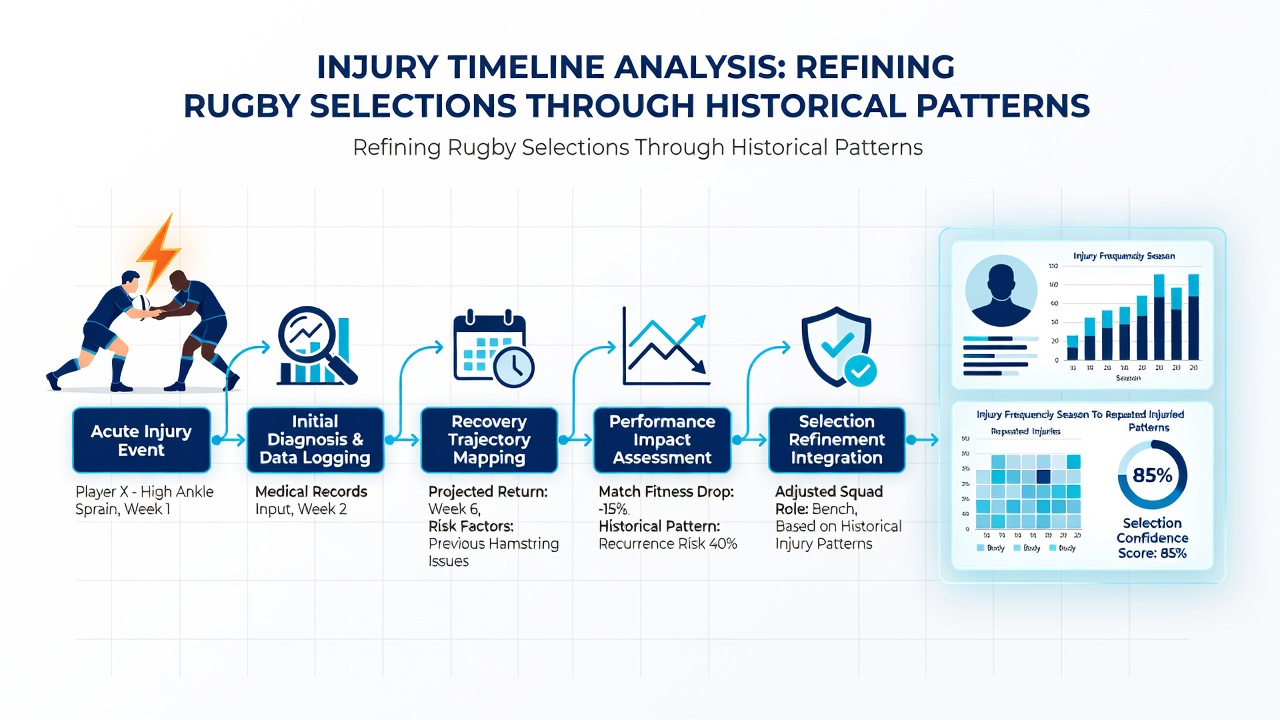
European club competitions contribute additional layers through centralized injury surveillance programs that began expanding in the early 2020s. Figures reveal higher incidence rates for concussions during high-stakes knockout stages, with recovery protocols standardized under international guidelines that mandate graduated return-to-play steps. Teams that integrate these multi-source datasets into selection meetings report fewer unexpected absences during critical phases of the calendar.
Application in Modern Squad Building
Coaching staff cross-reference historical timelines against current squad fitness reports to build depth charts that account for likely downtime. For example, forwards who sustain rib cartilage damage typically require four to six weeks before full contact training resumes, based on longitudinal studies from Canadian rugby programs. This information guides decisions on whether to retain specialists or rotate utility players who cover multiple roles.
National teams preparing for July 2026 internationals have begun layering timeline projections into pre-tour assessments, especially for athletes returning from off-season procedures. Patterns documented in Super Rugby archives demonstrate that players in their late twenties recover from knee surgeries at rates comparable to younger cohorts when monitored through structured rehabilitation phases.
Case Examples from Recent Seasons
One documented instance involved a Premiership side that adjusted its front-row rotation after reviewing five-year data on scrum-related neck injuries, resulting in fewer mid-season call-ups from academy ranks. Another example from the Southern Hemisphere shows how timeline analysis helped a national selector avoid over-reliance on a fly-half with repeated ankle sprain history during a compressed schedule. Such applications rely on transparent reporting standards established by governing bodies that emphasize privacy-compliant data sharing.
Conclusion
Rugby organizations continue to refine selection frameworks by embedding injury timeline analysis into routine planning, supported by expanding datasets from diverse competitions worldwide. The practice draws on verified recovery statistics and position-specific risk profiles to inform decisions that align player welfare with competitive demands across domestic and international calendars.