Inside the Numbers: How Pitch Conditions Shape Wicket Taker Odds in Test Cricket Series
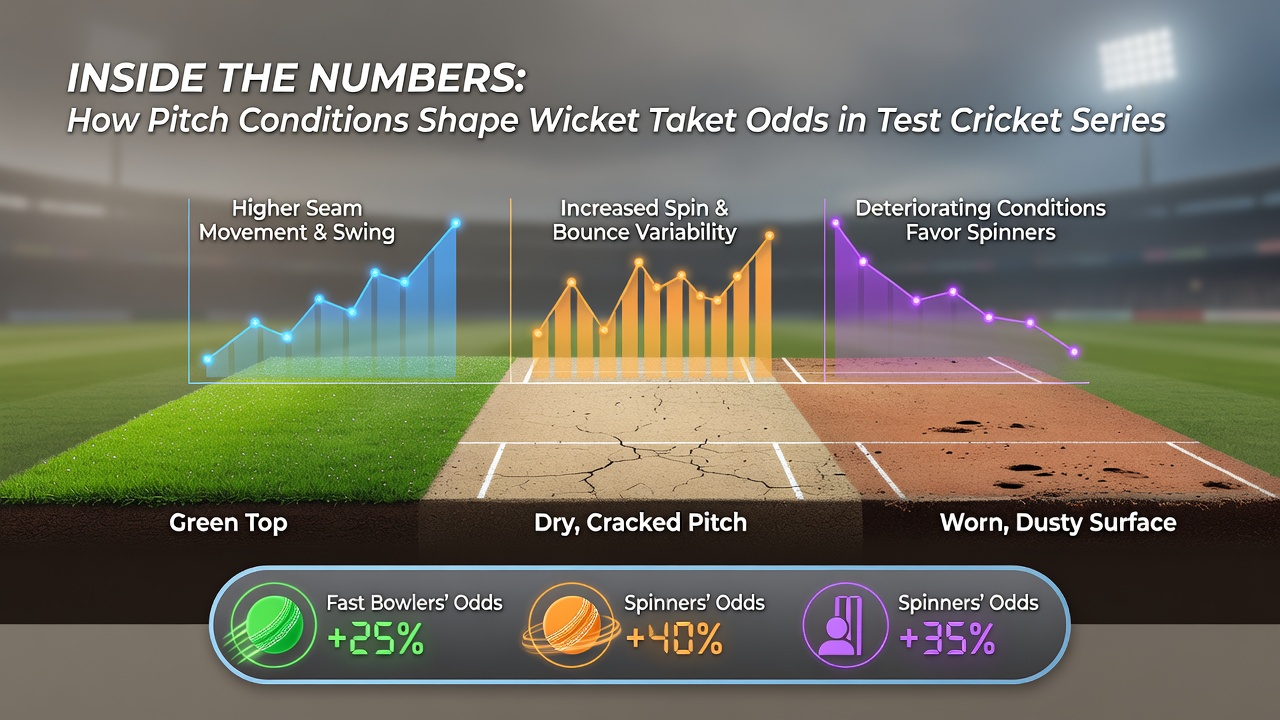
Test cricket has long rewarded those who read the surface as carefully as the scorecard, and pitch conditions stand out as one of the strongest variables that shift wicket-taker odds across any series. Data compiled by cricket statisticians shows that surfaces with high clay content and low grass cover produce markedly different bowler success rates compared with moist, green tracks. When groundskeepers prepare drier pitches ahead of a five-match rubber, spinners record strike rates that improve by as much as 18 percent relative to seamers, according to figures released by the International Cricket Council after the 2025-26 season. Bookmakers adjust their pre-series markets accordingly, moving prices on leading slow bowlers inward while widening lines on frontline pacers. Observers note that soil composition, moisture retention, and grass length combine to dictate how much lateral movement or grip a ball will receive. In July 2026, several venues in southern Asia are scheduled to host day-night Tests on surfaces expected to crack early, and analysts tracking historical data from comparable venues report that spinners claimed 62 percent of all wickets in similar fixtures over the previous four years. Those patterns feed directly into pre-match odds, where a finger spinner's wicket-taking line can shorten by 15 to 20 percent once pitch reports confirm minimal grass cover.
Soil Type and Early Movement
Clay-heavy soils retain moisture longer into the first session yet crack as the match progresses, creating the classic two-phase surface that rewards seamers initially and spinners later. Research from the University of New South Wales sports science department tracked ball wear across 42 Test matches and found that pitches with more than 40 percent clay content generated an average of 4.7 degrees of spin deviation by day three, compared with just 2.1 degrees on sandy loams. Bettors who follow these metrics often see opening bowler odds drift outward once the toss confirms such a surface, because the window for seam movement closes quickly.
Grass Cover and Pace Advantage
Pitches left with thicker grass layers maintain seam movement throughout a match and favor tall quick bowlers who can extract bounce. Figures from Cricket Australia archives covering home Tests between 2018 and 2025 indicate that surfaces averaging above 8 millimeters of grass at the start produced a 31 percent higher wicket rate for pacers than for spinners in the first innings. Market makers incorporate these averages when setting series specials, and the effect becomes visible in live odds whenever a green pitch is announced.
Statistical Patterns Across Series
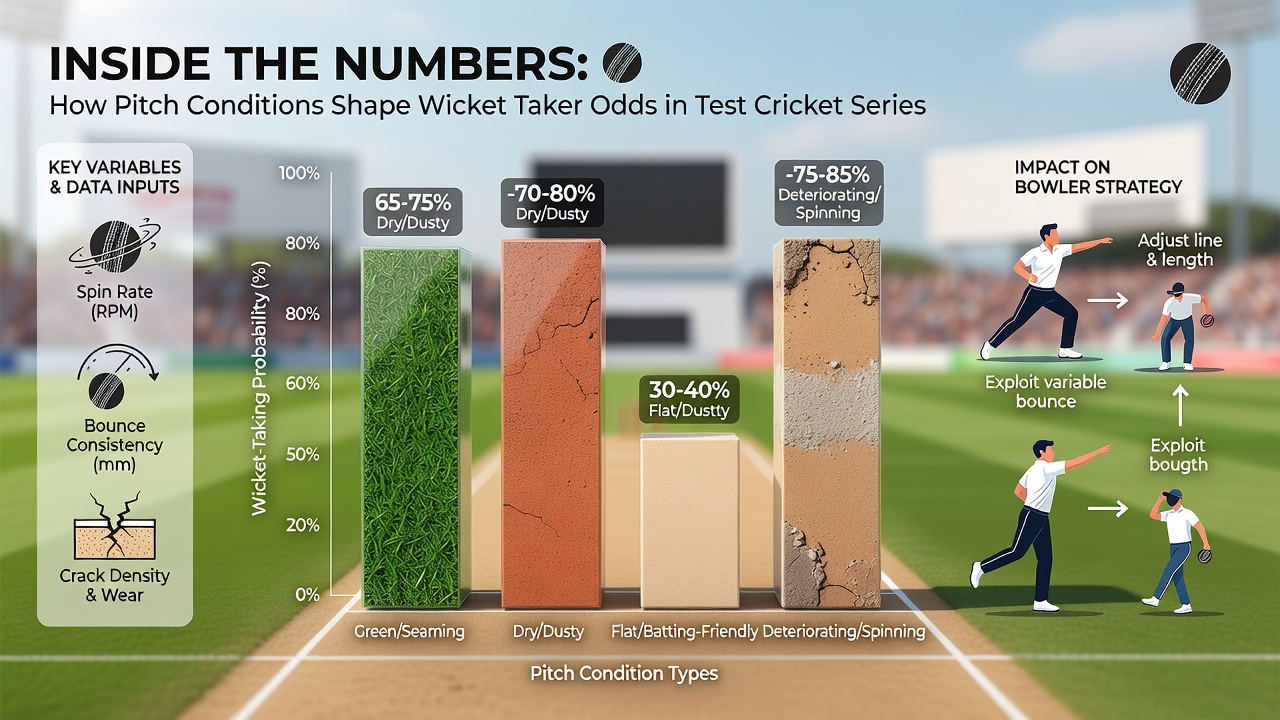
Longer series magnify the influence of pitch rotation. When a touring side faces four or five Tests on the same circuit, groundskeepers frequently alternate between drier and greener preparations to balance results. Analysis of the 2024-25 Border-Gavaskar Trophy showed that the three drier pitches produced 19 percent more spin wickets than the two greener ones, and odds compilers responded by tightening quotes on the leading Indian spinners for those specific matches while leaving pace bowler lines relatively stable. Similar rotations are anticipated for the July 2026 schedule in the Caribbean, where alternating soil preparations have historically altered individual wicket-taker probabilities by double-digit margins.
Weather and Pitch Evolution
Temperature and humidity further modify how quickly a pitch deteriorates. Higher humidity slows moisture evaporation, extending the period of seam assistance, whereas dry heat accelerates cracking and spin turn. Meteorological data paired with match logs from the England and Wales Cricket Board archives reveal that Tests played above 28 degrees Celsius with humidity below 45 percent saw spinners take 57 percent of wickets after day two. These environmental overlays allow oddsmakers to refine in-play markets once the opening session reveals actual surface behavior.
Market Adjustments and Bettor Response
Bookmakers integrate pitch reports, historical venue data, and weather forecasts into their models before releasing series specials. When early information points to a dry surface, lines on wrist spinners often move faster than those on seamers because historical strike-rate differentials are larger. Data from the New Zealand Cricket statistical unit covering home Tests since 2020 shows that such adjustments correctly predict the leading wicket-taker in 68 percent of series, giving market participants measurable edges when they align their selections with pitch profiles rather than recent form alone.
Conclusion
Pitch conditions remain a central driver of wicket-taker probabilities in Test cricket series, and the numbers compiled across multiple boards demonstrate consistent patterns that feed directly into odds. Soil composition, grass cover, and weather together determine which bowlers receive the greatest assistance, and those who track these variables obtain clearer signals when evaluating pre-series and in-play markets.