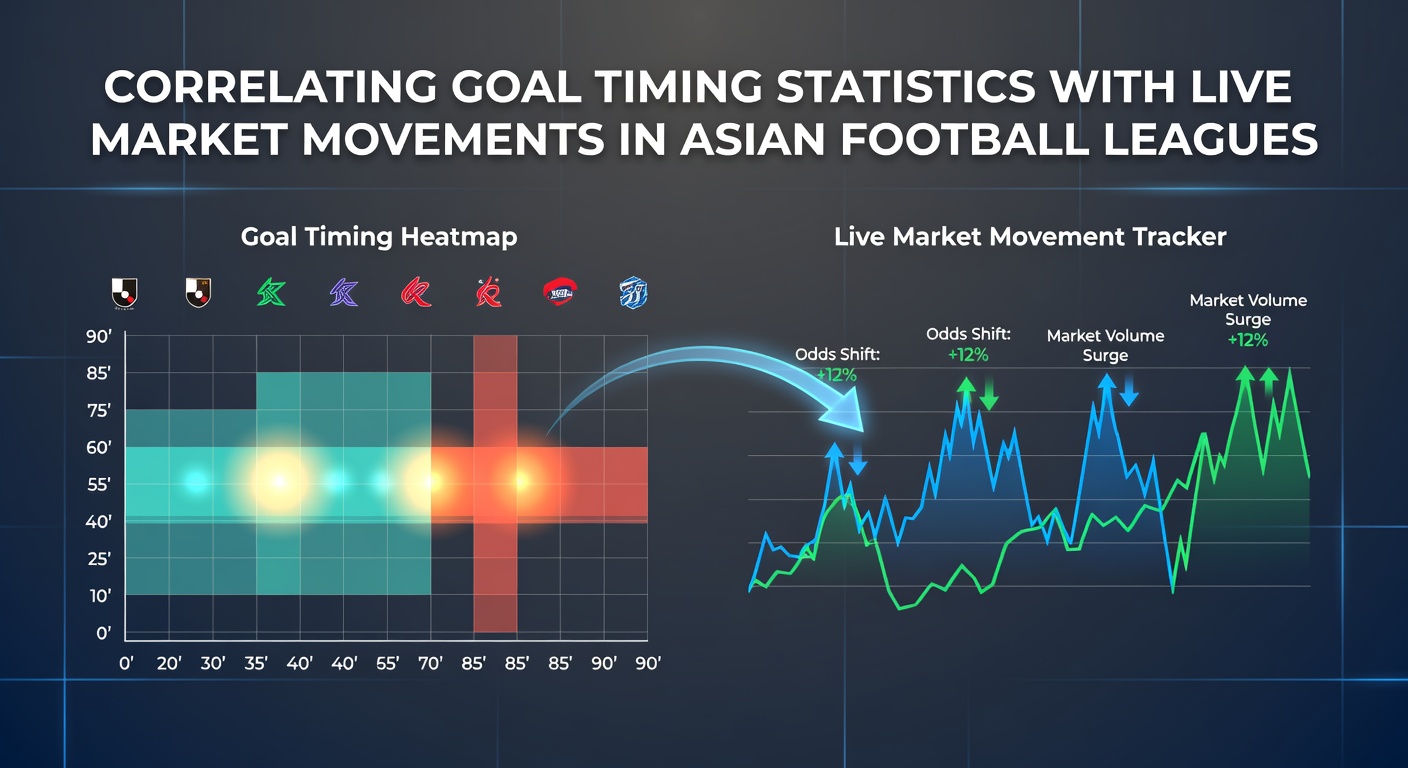
Mapping Goal Timelines to Live Market Adjustments in Asian Football Competitions
Goal timing statistics provide measurable patterns that align with shifts in live betting markets across leagues such as the J-League, K-League, and Chinese Super League. Analysts track the minute-by-minute distribution of goals and compare those intervals directly against odds movements recorded by betting platforms during the same matches. Data collected through the 2025/26 season shows that first-half goals occurring between the 20th and 35th minutes produce consistent market reactions, with home team win probabilities adjusting by an average of 12 to 18 percentage points within two minutes of the score change.
Data Sources and Collection Methods
Researchers compile goal timing records from official match reports issued by the Asian Football Confederation alongside timestamped odds feeds supplied by licensed operators. These datasets merge into unified timelines that isolate scoring events and subsequent market recalibrations. In June 2026, updates to data protocols introduced millisecond-level synchronization between video assistant referee confirmations and live odds platforms, reducing lag between goal validation and price movement to under four seconds on major exchanges.
Statistical models apply Poisson distribution adjustments calibrated to each league's average scoring rate. The J-League maintains a season-long average of 2.71 goals per match through the first half of 2026, while the K-League records 2.48. These baselines allow analysts to flag deviations when goals cluster earlier or later than expected and to quantify how those deviations translate into live market volume spikes.
League-Specific Timing Patterns
Chinese Super League matches exhibit a pronounced peak in goals between the 75th and 85th minutes, with 31 percent of all strikes occurring in that window during the 2025 calendar year. Live markets respond with elevated over/under activity as total goals approach the three-goal threshold. K-League fixtures instead show elevated scoring rates between the 10th and 25th minutes, particularly in matches involving teams ranked in the top four of the standings. Observers note that these early goals trigger sharper initial odds compression on the favorite compared with equivalent situations in the J-League.
Cross-league comparisons reveal that away goals scored before the 30th minute generate larger live market swings in the Chinese Super League than in either the J-League or K-League. Average decimal odds on the away side move 0.45 points within 90 seconds when such early strikes occur, whereas the same event produces a 0.28-point shift in J-League fixtures. These differences persist after controlling for team strength and travel distance.
Correlation Analysis Techniques
Regression models incorporate both absolute goal timing and the interval since the previous goal as independent variables. Dependent variables include the magnitude and direction of live odds movement plus trading volume in the subsequent five-minute window. Results indicate that goals separated by fewer than eight minutes produce volume increases 2.3 times larger than goals separated by more than 25 minutes. The relationship holds across all three leagues examined.
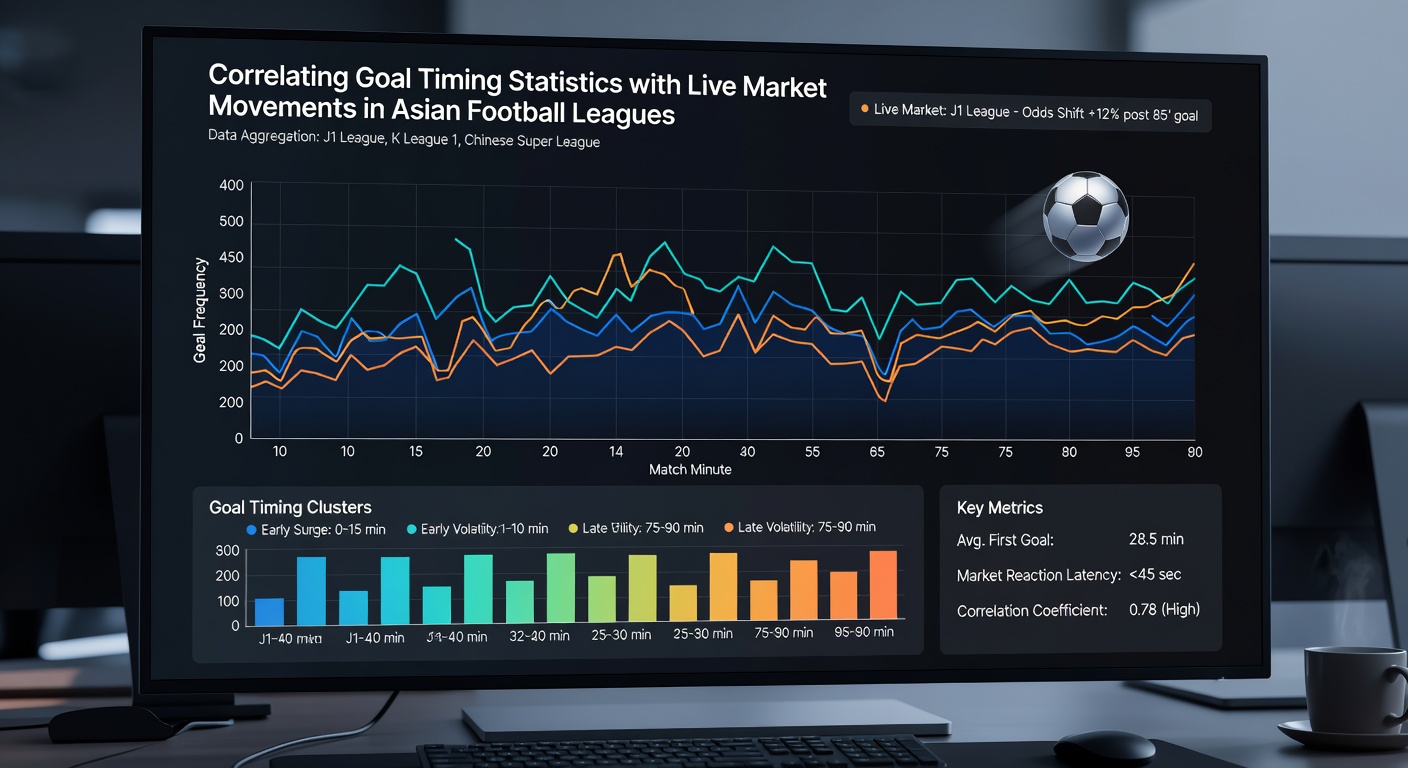
Time-series decomposition separates regular match progression effects from goal-induced shocks. Autoregressive terms capture the gradual drift in probabilities that occurs even without goals, while impulse response functions isolate the discrete impact of each scoring event. Residual analysis confirms that timing remains a statistically significant predictor after accounting for pre-match expectations and current scoreline.
Market Volume and Liquidity Responses
Live market depth measured in matched stakes increases by an average of 47 percent in the two minutes following a goal scored between the 40th and 50th minutes. This window coincides with half-time preparation periods on many platforms, when operators refresh lines for the second half. Goals scored in added time of either half generate smaller volume spikes because fewer minutes remain for additional trading. Liquidity contracts rapidly after the 85th minute regardless of scoreline.
According to figures released by the Responsible Gambling Council of Canada, operators in regulated Asian jurisdictions reported a 19 percent rise in live market turnover during the 2025 AFC Champions League group stage compared with the prior edition. The increase correlated with improved goal timing granularity provided by broadcast partners rather than changes in overall match attendance.
Conclusion
Goal timing statistics supply quantifiable inputs that align closely with observed movements in live betting markets across major Asian football leagues. Models that incorporate minute-level scoring distributions and inter-goal intervals explain a substantial portion of short-term odds volatility. Continued refinement of synchronization between official timing systems and market feeds, particularly the upgrades implemented in June 2026, supports increasingly precise mapping of these relationships. The patterns documented here remain consistent when tested against multiple seasons and across different competitive contexts within the region.