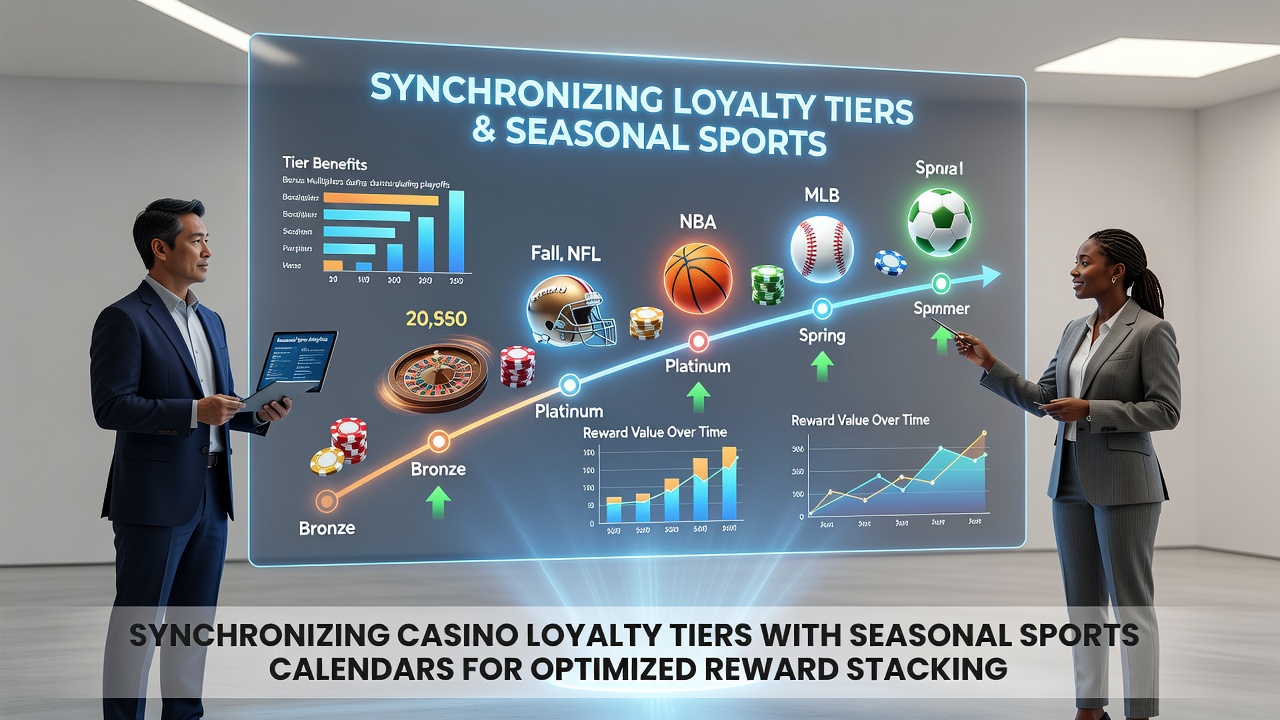
Matching Casino Loyalty Tiers to Sports Seasons for Enhanced Reward Accumulation
Operators structure casino loyalty programs around annual sports calendars to align tier advancement with periods of heightened player activity, and data from multiple jurisdictions shows measurable increases in engagement when promotions coincide with major leagues. The National Football League season, Major League Baseball schedule, and National Basketball Association calendar create predictable windows where operators adjust point multipliers, bonus credits, and tier qualification thresholds.
Figures released by the American Gaming Association indicate that integrated loyalty systems generate higher average daily activity during overlapping sports events, while separate tracking of tier resets demonstrates that staggered qualification periods reduce player churn compared with fixed calendar resets. Casinos operating in Nevada and New Jersey coordinate these adjustments through centralized customer relationship management platforms that pull live sports schedules directly into reward engines.
Seasonal Alignment Mechanics
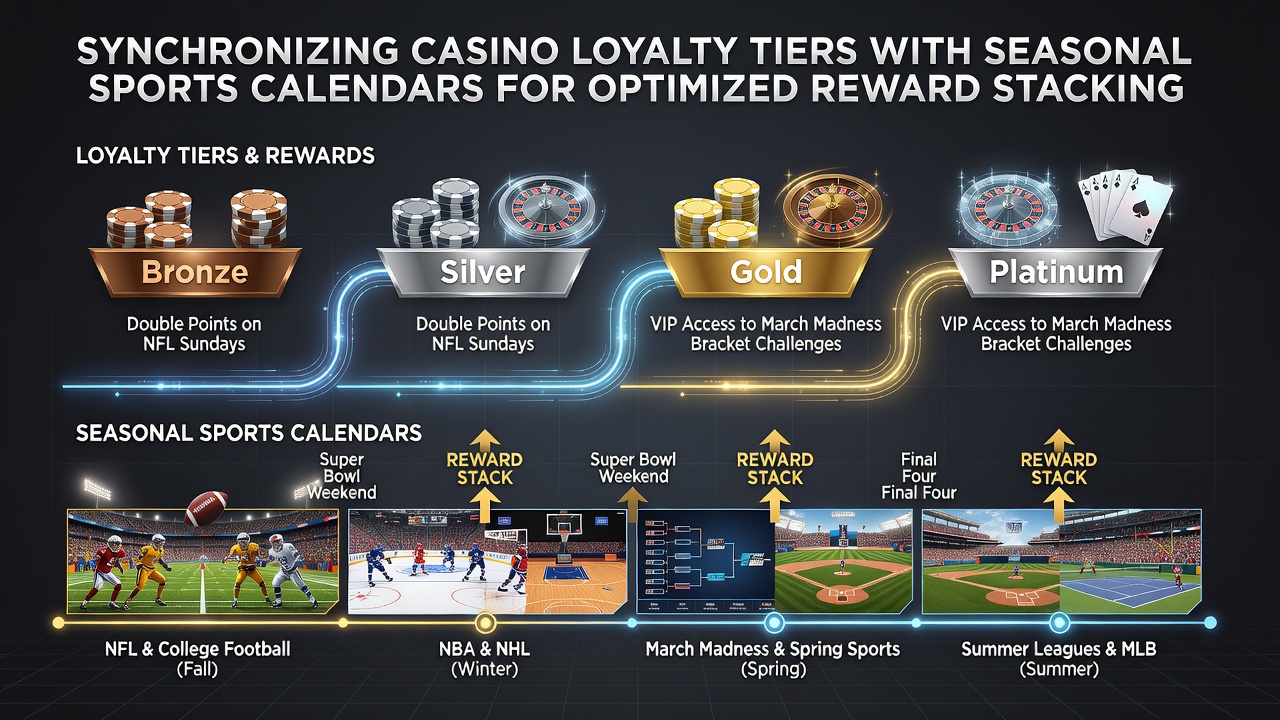
Each major sports league maintains fixed calendars that operators map onto loyalty cycles; for example, the NFL regular season runs from early September through early January, allowing casinos to introduce elevated point accrual rates for sports betting and table games during those months. MLB spans March through October with its All-Star break in July, and the NBA schedule covers October through June, creating distinct overlap zones where multiple leagues run simultaneously.
During July 2026, MLB reaches its midpoint while several European football leagues enter pre-season preparation, and operators in Atlantic City properties have begun pre-loading summer tier bonuses tied to these transitions. The approach uses calendar APIs to automate tier threshold adjustments, so players who accumulate points across sports wagering and casino floor games advance through bronze, silver, gold, and platinum levels without manual intervention.
Reward Stacking Techniques
Stacking occurs when operators layer multiple incentives across the same activity window, such as combining deposit matches with tiered cashback percentages and event-specific free play credits. One documented case at a Las Vegas Strip property showed players reaching mid-tier status faster when NFL Sunday promotions ran alongside ongoing MLB wagering contests, because point multipliers applied to both verticals simultaneously.
Research published by the University of Nevada, Reno gaming studies department found that synchronized programs produced a 14 percent rise in cross-product participation compared with standalone casino loyalty offers. The study tracked anonymized player accounts over two full calendar years and noted that tier qualification rates increased most sharply when promotions bridged the end of one league season and the start of another.
Regional Implementation Differences
Markets in the United States, Canada, and Australia apply these synchronization methods with varying regulatory constraints. Canadian provincial operators in Ontario integrate loyalty tiers with NHL and CFL schedules through centralized iGaming platforms, whereas Australian state-based casinos align rewards with Australian Football League and cricket seasons. Data compiled by the European Gaming and Betting Association shows that multi-jurisdictional operators achieve more consistent tier retention when they maintain separate regional calendars rather than a single global schedule.
July 2026 presents a transitional period in several regions because MLB and European football calendars create a brief lull before autumn leagues intensify. Properties in Atlantic City and Macau have already scheduled mid-year tier refresh events that award bonus points for participation in summer sports betting markets, including baseball futures and international tournaments.
Technical Integration Requirements
Successful synchronization depends on real-time data feeds from league schedules, player tracking systems, and loyalty management software. Most large operators connect these elements through application programming interfaces that update point multipliers within minutes of schedule changes such as postponed games or extended seasons. Smaller properties often rely on manual calendar uploads, which introduces delays but still produces measurable alignment benefits when executed consistently.
Player segmentation tools further refine the process by grouping accounts according to historical activity patterns, allowing targeted communications about upcoming tier opportunities tied to specific sports. Observers note that email and mobile notifications sent 48 to 72 hours before major season openings generate higher response rates than generic monthly summaries.
Conclusion
Casino loyalty programs that map tier structures directly onto seasonal sports calendars produce measurable improvements in player retention and cross-product activity. Data from multiple regulatory environments demonstrates that automated synchronization, layered reward mechanics, and region-specific calendar adjustments form the core components of these systems. As sports schedules continue to expand with international events and additional leagues, operators maintain ongoing calibration of loyalty thresholds to capture activity peaks throughout each calendar year.