
Referee Tendencies Across Major Leagues Create New Pathways for Live Accumulator Refinements
Referee decision patterns vary noticeably between leagues and these differences supply concrete data points for bettors who adjust in-play accumulators mid-match; researchers tracking thousands of fixtures have catalogued how card rates, penalty awards and stoppage-time additions shift by competition, by region and by official, and those who study the numbers treat them as measurable inputs rather than random noise.
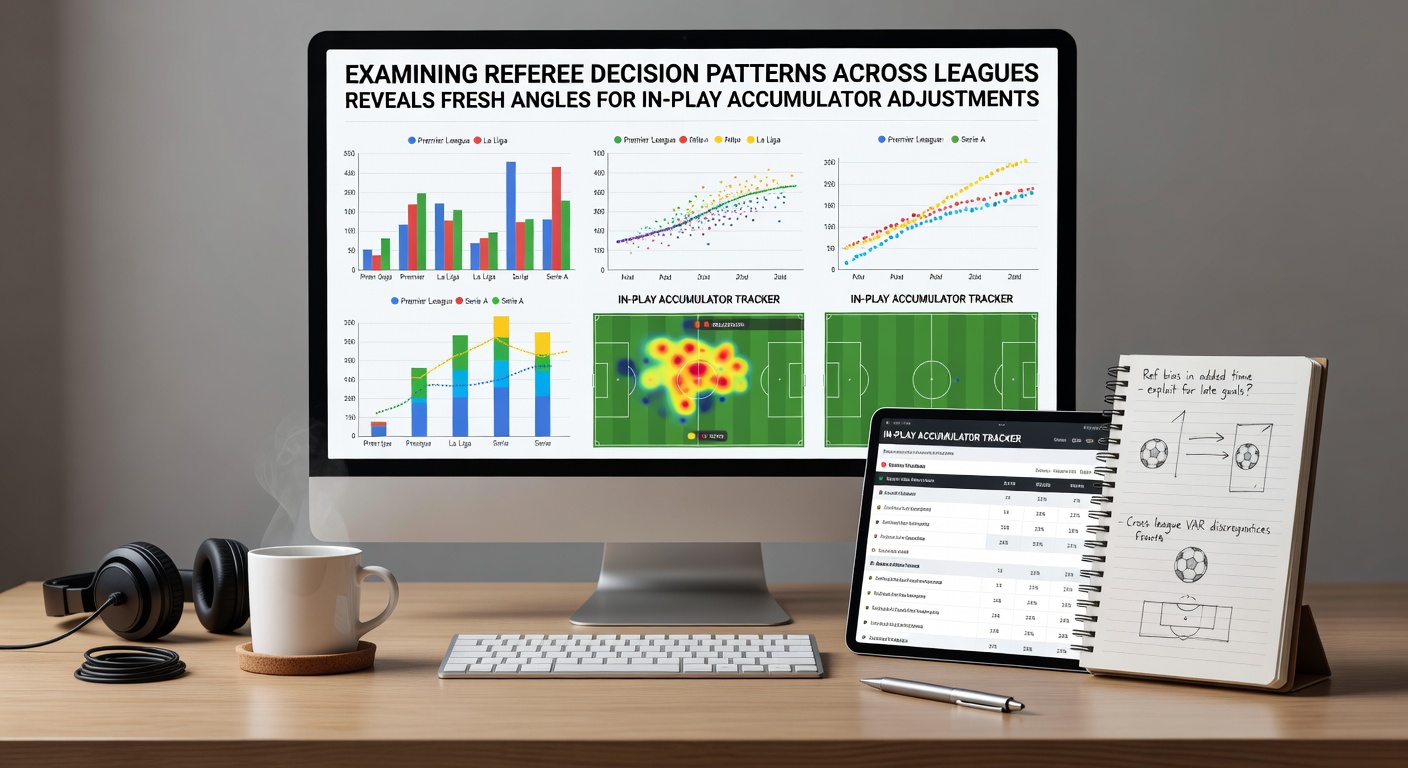
In the English Premier League during the 2025-26 campaign, matches averaged 5.4 yellow cards through the first week of May 2026 according to figures compiled by league statisticians, while Bundesliga fixtures in the same window posted 4.1 yellows per game and La Liga contests sat at 5.8; the spread matters because accumulator builders who add “over 4.5 cards” legs can recalibrate stakes once the opening 30 minutes reveal which referee crew is officiating and which league norms apply.
League-Specific Card and Penalty Baselines
Observers note that Serie A referees continue to award penalties at a higher rate than their counterparts in the Eredivisie, with 0.32 penalties per match versus 0.21 through the spring months of 2026, and this gap widens further when matches remain goalless after the hour mark; data sets from Opta and similar providers show that Serie A officials reach for their whistle more readily in the final third when scorelines stay tight, giving accumulator managers a window to add or remove penalty-related outcomes before the 70-minute mark.
MLS matches, by contrast, feature longer average stoppage times in the second half, reaching 6 minutes and 12 seconds in games played during April and May 2026, whereas Bundesliga stoppages average closer to 4 minutes and 30 seconds; the extra minutes translate into additional injury-time goal opportunities that can swing accumulator returns when bettors layer late-game props onto existing selections.
Individual Referee Profiles and In-Game Adjustments
Those who compile referee-specific reports highlight consistent differences even inside the same league; one long-serving Premier League official issued 6.8 cards per 90 minutes across his first 28 appointments of the season, while another averaged 4.2 over a comparable workload, and bettors monitoring these profiles have learned to shift accumulator weightings once the fourth official raises the board displaying the referee’s name.
Video Assistant Referee interventions add another layer, because leagues that expanded VAR protocols in 2025 now review more potential red-card incidents in the opening 15 minutes; UEFA’s technical reports for the 2025-26 Champions League group stage recorded a 14 percent increase in early red-card checks compared with the prior season, and this early scrutiny tends to compress card totals later in matches because teams adjust their tackling intensity once an early precedent is set.
Weather, Travel and Schedule Influences on Decision Rates
Travel schedules and fixture congestion also shape patterns; Canadian Soccer Association data released in March 2026 indicated that referees working matches after cross-country flights issued 11 percent more fouls in the first 20 minutes than officials who remained within their home region, and accumulator builders who track team travel logs can therefore front-load foul-based legs when one side has crossed multiple time zones.
Temperature extremes produce measurable effects too, with matches played above 28 degrees Celsius showing elevated card counts in South American league fixtures tracked by CONMEBOL analysts, because players fatigue faster and commit more reckless challenges; bettors who monitor pitch-side conditions before kickoff can therefore adjust temperature-sensitive accumulator components within the first quarter-hour once live feeds confirm actual conditions.
Practical Integration into Accumulator Construction
Instead of building an accumulator at kickoff and leaving it untouched, experienced operators now treat referee data as a live variable that updates every 15 minutes; when a high-card referee replaces an original appointee at short notice, they add card-over legs or remove clean-sheet selections, and the opposite adjustment occurs when a lenient official steps in.
European Club Association briefings circulated among member clubs in late April 2026 encouraged coaches to brief players on the tendencies of upcoming officials, and the resulting tactical shifts appear in the data as fewer cards in the opening half when teams know a strict referee is in charge; bettors who follow the same briefings gain an informational edge that can be converted into accumulator tweaks before the market fully prices the change.
Emerging Data Sources and Analytical Tools
Academic researchers at institutions in Germany and Australia have begun publishing open-access referee datasets that include granular timing of decisions, and these resources allow third-party platforms to generate real-time dashboards; bettors who subscribe to such feeds receive alerts when a referee’s current match deviates from his season-long average, prompting immediate accumulator rebalancing across linked bets.
Because these datasets now incorporate pitch-tracking metrics alongside traditional card counts, they reveal correlations between high pressing intensity and subsequent disciplinary actions, giving accumulator managers an additional signal they can monitor through live broadcast overlays rather than waiting for post-match summaries.
Conclusion
Referee decision patterns, once viewed as background noise, now function as quantifiable inputs that alter accumulator probabilities from minute to minute across multiple leagues; the combination of league baselines, individual official profiles, travel effects and expanded VAR protocols supplies a growing toolkit for those who refine live multiples, and continued expansion of granular data sources suggests these adjustments will become more precise as the 2026 calendar year progresses.