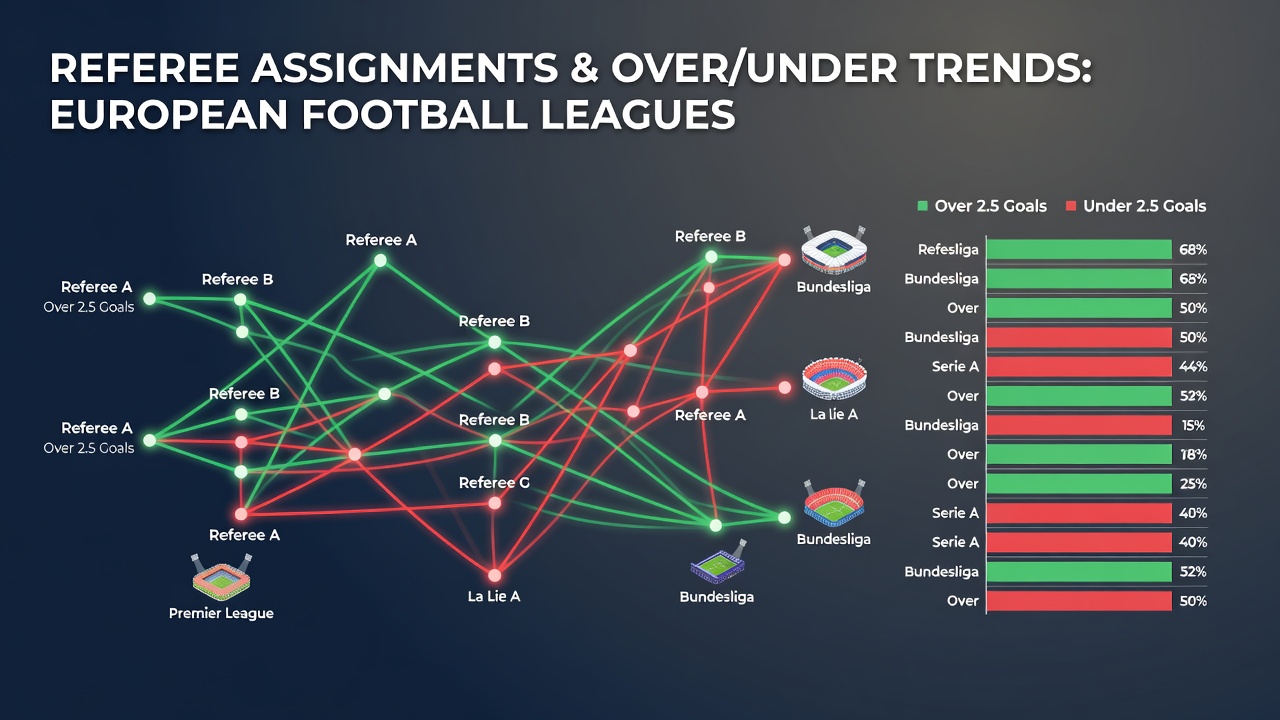
Referee Trends Shaping Totals Markets Across Europe's Elite Football Divisions
European football leagues generate extensive datasets each season and analysts track referee assignments alongside scoring outcomes to identify measurable correlations with over/under results. Data from the 2024-25 and 2025-26 campaigns shows that officials with distinct disciplinary profiles tend to influence game tempo and total goals in consistent ways across the Premier League, Bundesliga, La Liga and Serie A.
Leagues publish detailed match reports that include referee names along with cards, fouls and stoppage time and these records allow researchers to map patterns over hundreds of fixtures. In the Bundesliga for instance officials who average more than five yellow cards per game have presided over matches that finish under the total line at a slightly higher rate than league averages according to aggregated season statistics released by league organizers.
Disciplinary Styles and Match Flow
Referees differ in how they manage physical play and those differences affect the number of interruptions and the amount of added time. Strict officials who issue frequent cautions create more stoppages which can reduce open play and limit scoring opportunities while lenient referees allow contests to maintain rhythm and sometimes produce higher goal counts. Observers note that these tendencies appear across multiple seasons and remain stable even when the same referee moves between different stadiums or team matchups.
Studies conducted by academic groups in Spain examined over 2,000 La Liga matches and they isolated referee identity as a variable while controlling for team strength and schedule congestion. The analysis revealed that certain officials consistently correlate with totals falling below the closing line in roughly 53 percent of their assignments whereas others align with overs at comparable margins. These findings hold after adjustments for home advantage and weather conditions that also influence scoring.
League-Specific Patterns Emerging in Recent Seasons
Each competition presents unique contexts that interact with referee behavior. Serie A matches often feature lower baseline scoring and officials who add significant stoppage time have been linked to slight increases in late goals that push results over the total. Bundesliga fixtures on the other hand display higher average goals overall and referees known for quick restarts sometimes see matches stay under because teams maintain possession without extended breaks.
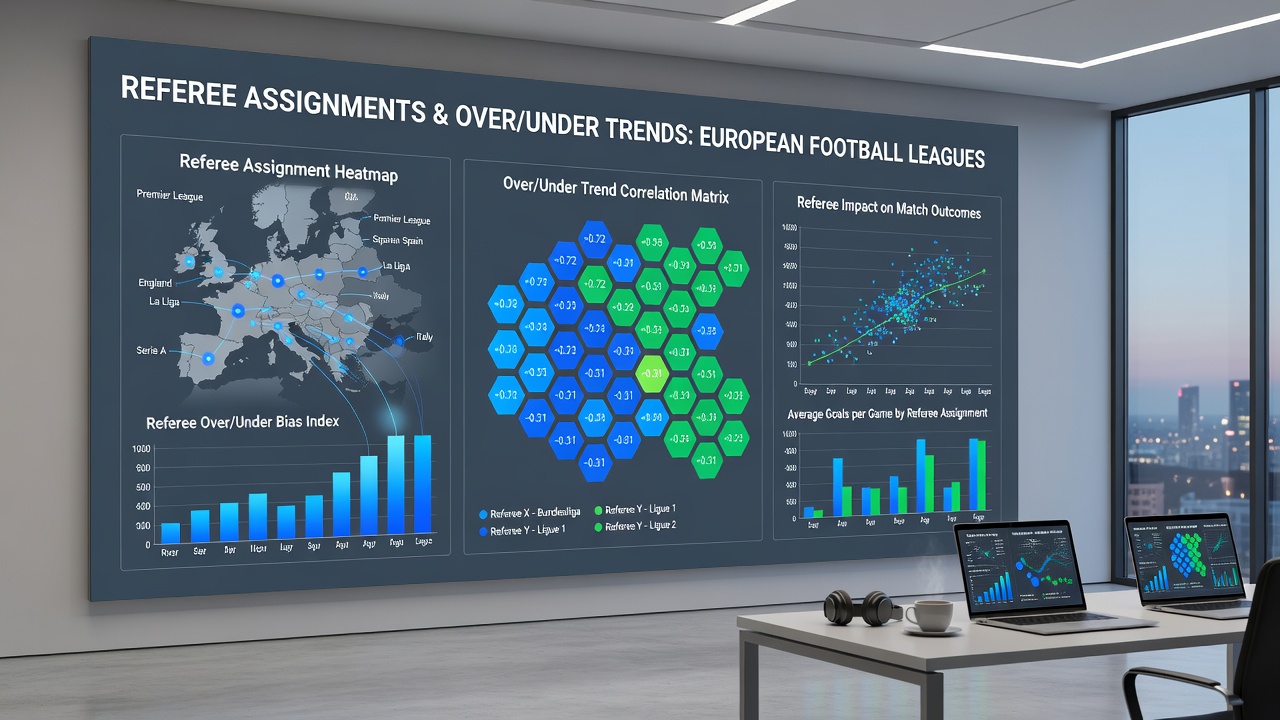
During July 2026 analysts reviewed the prior campaign's full referee logs and they highlighted several officials whose assignments produced repeated under results in both domestic and European competition. The patterns emerged most clearly in matches involving mid-table sides where defensive structures already limit open play and additional cards further slowed proceedings. Data providers that compile these statistics across UEFA-affiliated leagues make the raw numbers available for independent verification and cross-checking with betting market closing lines.
Statistical Approaches Used by Researchers
Regression models that incorporate referee fixed effects alongside team metrics and fixture difficulty help isolate the official's contribution to total goals. One European university project published in 2025 applied such techniques to five seasons of data and the results indicated that referee identity explains a small but statistically detectable portion of variance in over/under outcomes after accounting for stronger predictors like expected goals and rest days. The models also flag interactions where certain referees show amplified effects when assigned to high-pressing teams.
Industry reports from football analytics organizations further support these observations by publishing periodic updates that list referee averages for cards, fouls and added time. Bettors and syndicates reference these reports when constructing models yet the correlations remain probabilistic rather than deterministic because match-specific events can override general tendencies on any given day.
Conclusion
Referee assignment data combined with scoring totals continues to attract attention from researchers and market participants across Europe's major leagues. Patterns documented in recent seasons demonstrate measurable associations between officiating profiles and over/under results although the effect sizes stay modest compared with team-level factors. Continued collection of detailed match statistics will allow further refinement of these correlations as additional campaigns unfold.