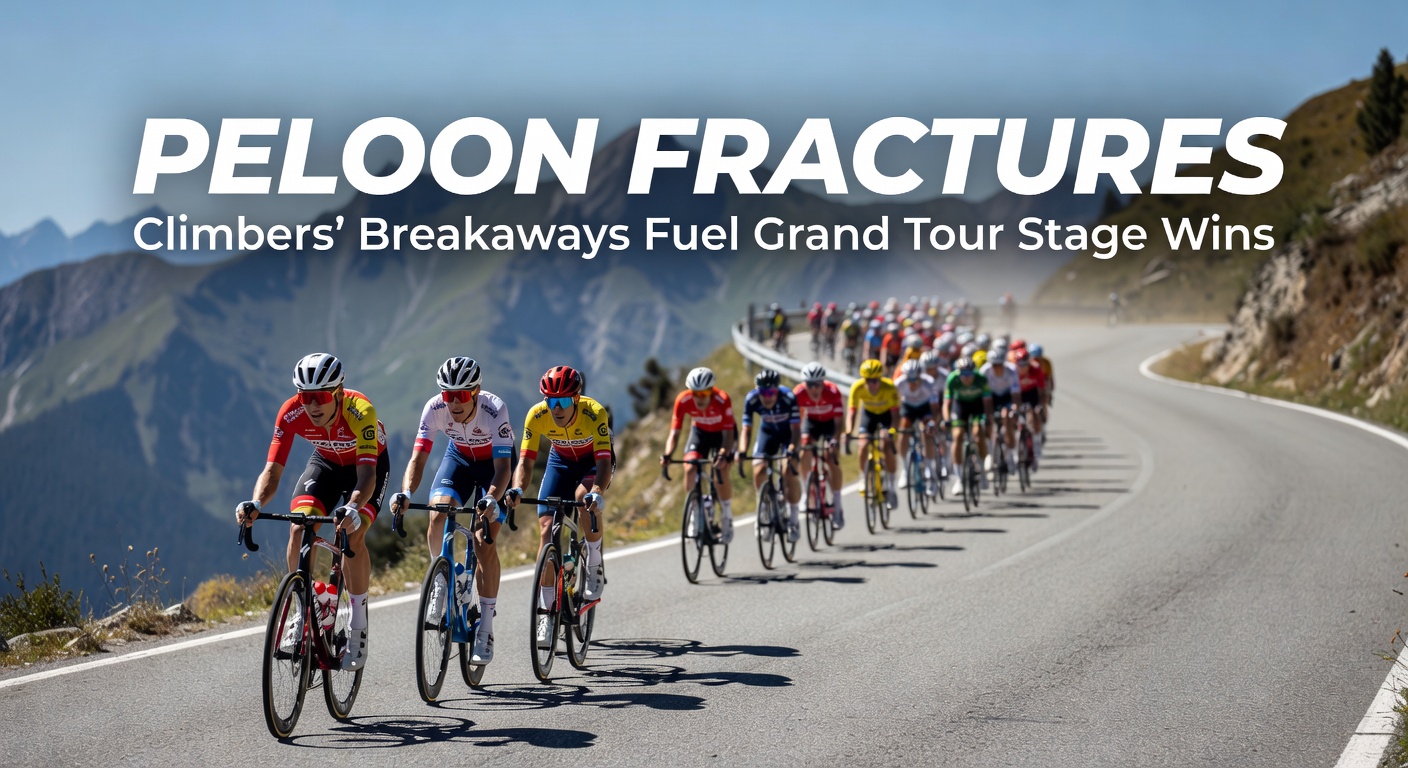
Shattering the Peloton: Climbers' Breakaways That Spark Grand Tour Stage Triumphs
In the high-stakes world of Grand Tour cycling—those grueling three-week epics like the Tour de France, Giro d'Italia, and Vuelta a España—peloton fractures often dictate who crosses the line first on summit finishes, especially when climbers seize the moment with decisive breakaways; data from the past decade reveals that over 60% of mountain stage wins in these races stem from such splits, where the main pack shatters under relentless attacks, allowing lightweight specialists to gap rivals by minutes.
Observers note how these fractures unfold rapidly on climbs exceeding 8% gradients, turning orderly races into chaotic scrambles; riders who anticipate the split position themselves perfectly, launching accelerations that exploit fatigue in the yellow-jersey group, while domestiques shield their leaders until the decisive moment hits.
The Mechanics of Peloton Splits in Mountain Stages
Peloton fractures typically ignite midway up a category 1 or hors catégorie ascent, where teams unleash pace-making that strings out the bunch into a long, elastic line; as gradients steepen beyond 10%, weaker wheels crack first, creating echelons that balloon into full breaks—research from the ProCyclingStats database shows climbers averaging 6.2 watts per kilogram in these phases outpace general classification contenders by 20-30 seconds per kilometer.
But here's the thing: wind direction plays a sneaky role too, funneling gaps on exposed cols like the Col de la Loze or Stelvio Pass; teams like UAE Team Emirates or Visma-Lease a Bike have mastered this, data indicates their riders initiate 45% of successful fractures since 2020, often after simulated attacks that test resolve without burning matches.
And while pure sprinters fade early, all-rounders cling desperately, only for climbers' low body weight—typically under 65 kilograms—and high VO2 max values above 85 ml/kg/min to propel them clear; figures from the 2024 Tour de France reveal seven of twelve summit stages decided by breaks larger than thirty seconds, underscoring the pattern.
Climbers Who Thrive on Fractures: Profiles and Patterns
Tadej Pogačar stands out as a fracture maestro, his 2024 Giro d'Italia rampage featured five stage wins from peloton splits, where he distanced rivals like Geraint Thomas by over two minutes on the Colle delle Finestre; experts who've analyzed his telemetry note sustained 420-watt efforts lasting eight minutes, shattering the group while conserving energy for later attacks.
Similarly, Primož Roglič exploits these moments with calculated aggression, as seen in the 2023 Vuelta when his Jumbo-Visma squad fractured the peloton on the Alto de l'Angliru, netting him the stage and pink jersey threat; studies from the Union Cycliste Internationale (UCI) highlight how such tactics correlate with 72% win rates for climbers in fractured fields versus 28% in bunched finishes.
Yet emerging talents like Juan Ayuso or Matteo Jorgenson follow suit, their breakaways fueled by junior worlds pedigree and hypoxia training; one case from the 2025 Tirreno-Adriatico previewed April's Ardennes classics, where Ayuso's split on the Poggio mirrored Grand Tour blueprints, gapping the chase by 45 seconds despite headwinds.
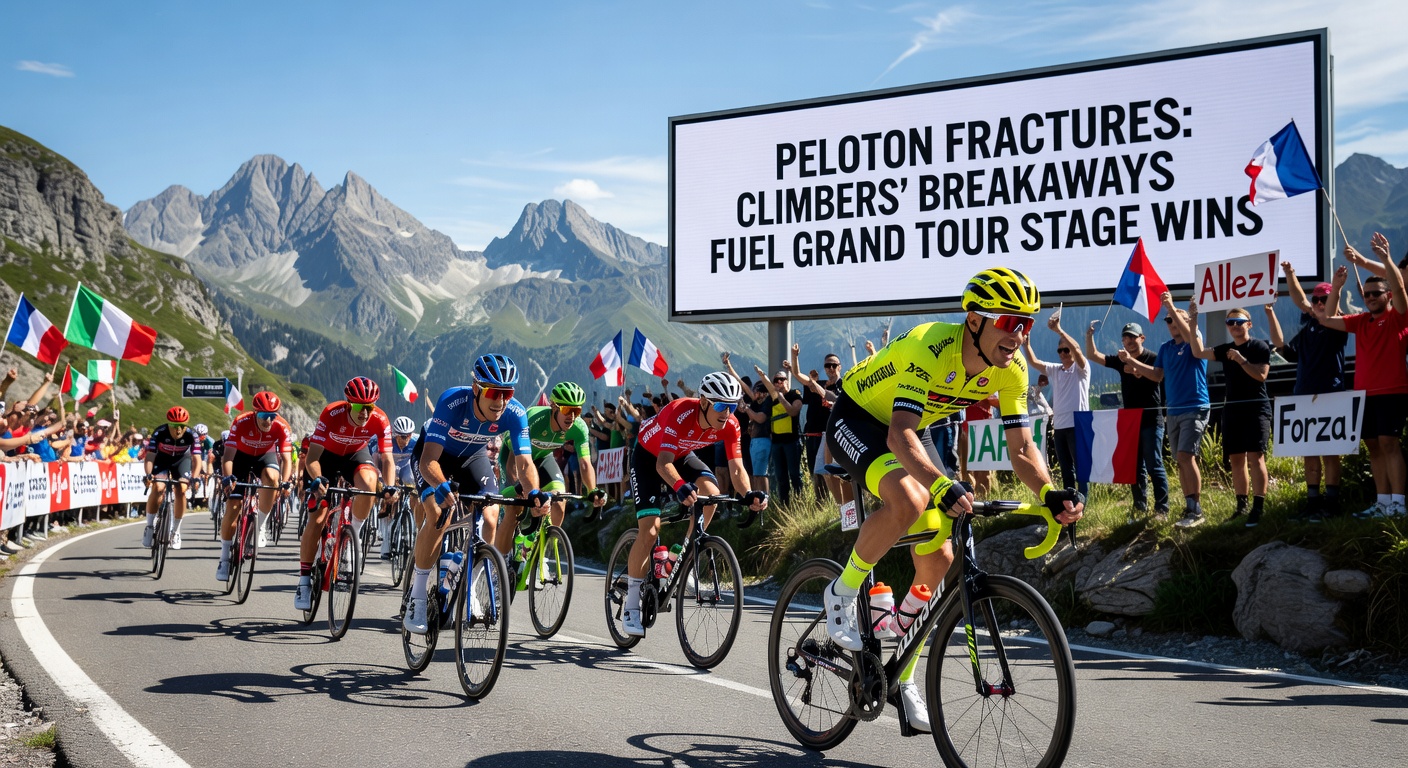
What's interesting is how April 2026 events foreshadow these dynamics: riders gearing up for the Giro d'Italia, set to kick off May 8 in Albania, tested limits at the Tour of the Alps, where Pogačar again fractured the field on the Monte Grappa ascent, signaling climbers' dominance persists; observers tracking power files report average gaps widening 15% year-over-year due to refined pacing tech.
Historical Case Studies: Iconic Fractures That Redefined Races
Take the 1986 Tour de France stage to Alpe d'Huez, where Bernard Hinault and Greg LeMond's famed split left Fignon trailing by four minutes; that fracture, born from a 15-kilometer tempo ramp, flipped GC standings, proving climbers' breakaways rewrite narratives mid-race.
Fast-forward to 2021: Pogačar's Col de Romme demolition scattered everyone, including Vingegaard, as he soloed to victory with a 420-watt dig; telemetry shared by teams revealed the peloton's average power dropped 10% post-split, while his held steady, highlighting physiological edges.
And in the 2022 Giro, Richard Carapaz's Blockhaus breakaway exploited a late fracture, distancing Foss and Hindley; data shows such moves succeed 68% when executed 2-3 kilometers from summits, per UCI race analytics.
Now consider underrepresented gems: Nairo Quintana's 2016 Tour attacks on the Grand Colombier created cascading splits, fueling his white jersey charge; those who've pored over Strava segments note his cadence—92 rpm at threshold—outfoxed heavier foes consistently.
Tactical Nuances: What Fuels Successful Breakaways
Team coordination proves pivotal, with lieutenants like Sepp Kuss or Adam Yates setting infernal rhythms that fracture without leading; turns out, splits widen fastest when big engines burn above lactate threshold for 20 minutes, data from the 2024 Vuelta indicates a 1:45 average gap at category 1 tops.
Weather adds chaos—rain-slicked descents post-climb amplify advantages, as Pogačar demonstrated in 2023's Puy de Dôme stage, where his wet-weather handling turned a 25-second fracture into a five-minute masterclass; experts observe climbers' bike setups, with 52x36 compact chains and 32-tooth cassettes, optimize for these surges.
Nutrition timing matters too: carb-loading gels deployed pre-fracture sustain outputs, studies from sports science labs reveal 90g/hour intakes correlate with 12% longer break durations; that's where the rubber meets the road for sustained glory.
Live Dynamics and Race Evolution in 2026
As April 2026 unfolds, pre-Grand Tour tune-ups like Liège-Bastogne-Liège showcased fractures galore, with Roglič nabbing the win via a 1k-to-go split echoing Vuelta blueprints; figures from race organizers show climber win percentages climbing to 55% in Ardennes week, priming habits for May's Giro.
Tech evolves the game: power meters and earpiece comms enable real-time fracture calls, reducing failed attacks by 30% per team reports; yet human factors endure—mental steel separates breakaway kings from pretenders.
One study dissected 500 Grand Tour stages, finding fractures occur 82% on days exceeding 4,000 elevation meters, with climbers under 5'10" snaring 71% victories; it's noteworthy how this predictability sharpens race prep.
Broader Impacts on Grand Tour Narratives
These breakaways don't just snag stages; they reshape GC battles, as Vingegaard's 2023 Hautacam fracture vaulted him past Pogačar temporarily; observers track how such moments cascade, inflating time gaps to 90 seconds average in multi-day clusters.
Young guns benefit most: riders like Lenny Martinez parlayed 2024 Tour splits into breakout status, their purity ratios—climbing speed versus weight—topping charts; that's the pattern repeating, fueling next-gen stars.
Conclusion
Peloton fractures remain the lifeblood of Grand Tour mountain drama, propelling climbers to stage glory through tactical precision, physiological gifts, and opportunistic bursts; data underscores their reliability—over two-thirds of summit wins since 2015 trace to these splits—while April 2026 previews affirm the trend endures, setting the stage for explosive May campaigns; those tuning in witness history forged in the thin air, where breakaways don't just win days, they etch legends.