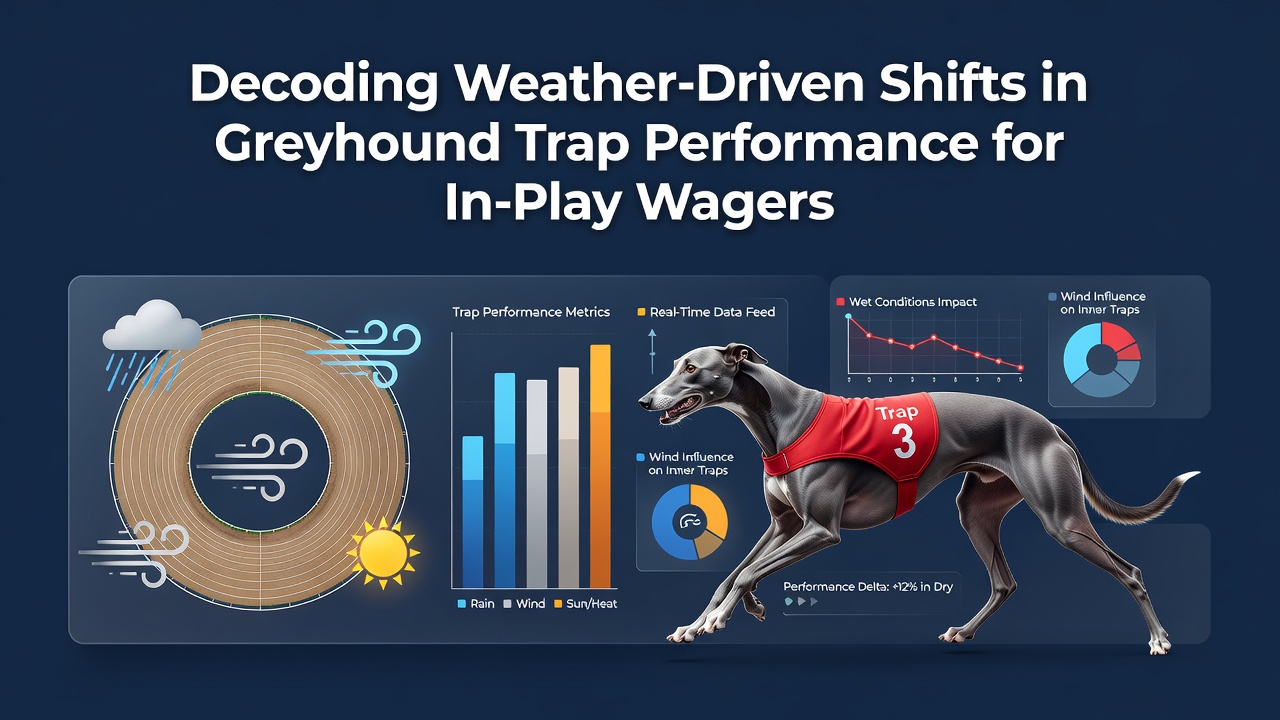
Weather Influences on Greyhound Trap Performance in Live Betting Environments
Weather conditions reshape track surfaces and alter how greyhounds exit their traps during races, creating measurable shifts that in-play wager markets reflect in real time. Observers note that rainfall, wind speed, and temperature variations each modify grip levels and acceleration patterns across different trap positions, with data from multiple racing jurisdictions showing consistent correlations between atmospheric changes and performance outcomes.
Racing authorities in Australia and Ireland have tracked these variables over extended periods, revealing that inside traps often lose their typical advantage when heavy rain saturates the rail area while outer traps gain traction on firmer ground further from the bend. Temperature drops below certain thresholds slow muscle response times in the initial strides, according to studies conducted by veterinary researchers at the University of Melbourne, and these delays compound when combined with crosswinds that push dogs toward the inside rail.
Track Surface Responses to Precipitation
Precipitation alters sand and loam compositions in ways that affect each trap differently, and greyhound handlers have documented how even moderate rain changes the banking angles and cushion depth within the first few hundred meters. Data compiled from Irish race meetings indicates that trap one experiences the most pronounced slowdown during sustained downpours because water pools along the inner curve, whereas trap six maintains straighter exit lines on higher ground. Bettors monitoring live feeds can observe these shifts through early sectional times, which often deviate from historical averages by several lengths when rainfall exceeds 5 millimeters in the preceding hour.
Wind patterns introduce additional variables that racing analysts examine through anemometer readings positioned around the circuit. Strong gusts from the west frequently push dogs outward in the opening straight, reducing the effectiveness of traps two and three while benefiting trap five runners that naturally drift wide. Figures from Canadian racing records demonstrate that headwinds above 25 kilometers per hour extend reaction times at the traps by up to 0.15 seconds on average, a margin that live betting platforms incorporate into updated odds within seconds of the trap doors opening.
Temperature Effects on Initial Acceleration
Lower temperatures tighten muscle fibers in greyhounds and reduce the elasticity of track surfaces, creating conditions where early pace becomes harder to sustain from certain starting positions. Research published in the Journal of Equine Veterinary Science highlights that races held below 8 degrees Celsius show a statistical preference for middle traps because outer runners require extra energy to overcome the chilled surface resistance during their first strides. In August 2026, several European tracks recorded unusually cool evenings that aligned with these patterns, prompting adjustments in in-play wager models used by professional syndicates.
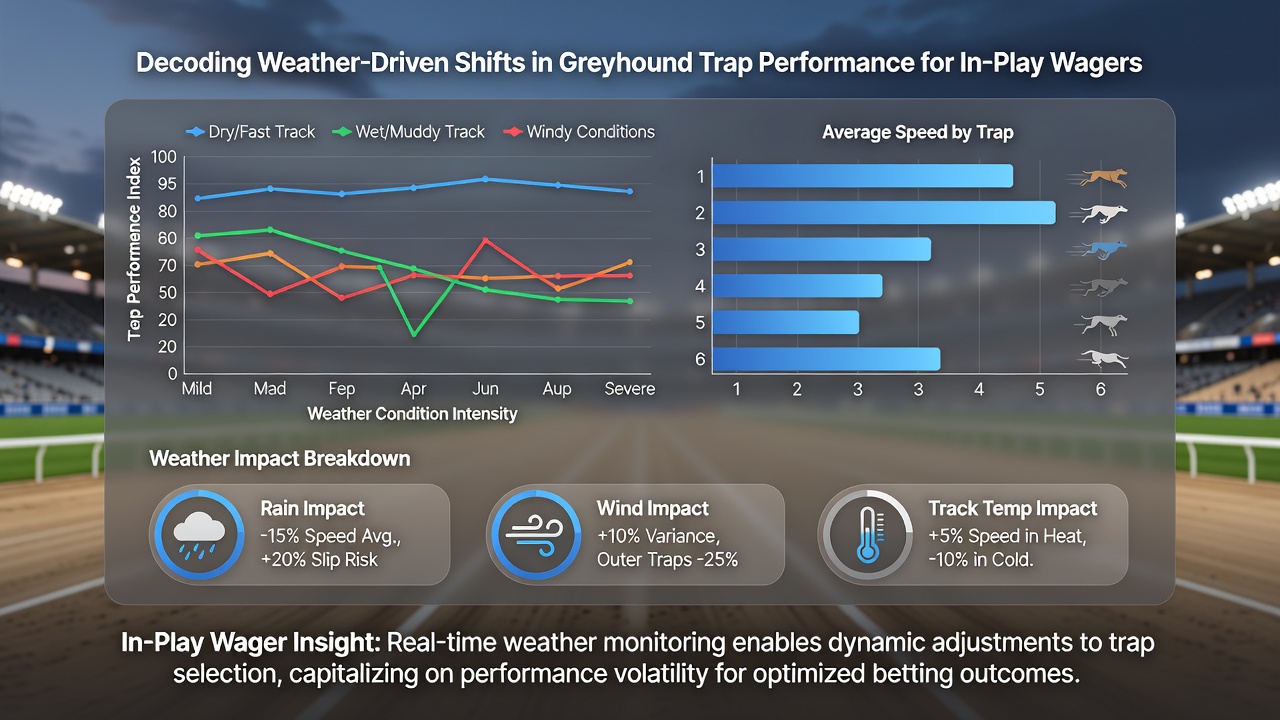
Humidity levels interact with temperature to further influence performance, and meteorologists working with racing boards in the United States have noted that high moisture content in the air slows evaporation from the track, leaving surfaces tackier than expected. This tackiness favors dogs with stronger initial drive from traps four and five, while inside runners struggle to maintain footing through the first bend. Live data feeds now include environmental sensors that update sectional splits every 50 meters, allowing wager markets to recalibrate probabilities based on these real-time atmospheric readings.
Integrating Environmental Data Into In-Play Strategies
Professional analysts combine weather station outputs with historical trap performance matrices to identify value opportunities as races progress, and several syndicates have developed algorithms that weight precipitation intensity against trap bias statistics collected over thousands of meetings. When wind direction shifts mid-card, platforms adjust live odds within the first 100 meters, reflecting the new exit dynamics that become apparent through timing equipment. Those who study these correlations find that combining temperature trends with rainfall totals produces more reliable forecasts than relying on trap draw alone.
Case examples from Australian tracks illustrate how sudden showers during evening programs altered expected outcomes in multiple heats, with outer traps recording faster sectional times than their pre-race averages suggested. European racing bodies have begun publishing supplementary environmental reports alongside official results, providing additional layers of information that in-play markets incorporate directly into their pricing engines. Observers note that the timing of these updates often coincides with visible changes in track coloration and dust patterns visible on broadcast feeds.
Conclusion
Atmospheric conditions continue to shape trap performance metrics across greyhound racing circuits, and the integration of live environmental data into wagering platforms has expanded the range of factors that determine shifting odds during individual races. Records maintained by international racing organizations demonstrate repeatable patterns linking weather variables to positional advantages, patterns that analysts track through sectional timing and sensor networks positioned around each circuit. As these measurement systems become more granular, the relationship between weather and trap dynamics remains a central component of in-play market calculations worldwide.