
Weather Patterns and Their Effects on Late-Season Horse Racing Form at UK Venues
Weather patterns exert considerable influence over late-season horse racing form across UK tracks, where autumn and winter meetings coincide with shifting climatic conditions that reshape turf surfaces and equine performance metrics. Data compiled by track officials and meteorological services reveals consistent correlations between precipitation levels, temperature fluctuations, and race outcomes during this period, with ground conditions emerging as the primary variable that alters horse suitability and finishing times.
Ground Conditions as the Central Factor
UK racecourses maintain detailed records of going reports that classify surfaces from firm to heavy based on moisture content, and these classifications directly stem from cumulative rainfall and drainage responses throughout the season. Late-season fixtures at venues such as Ascot, Haydock, and Musselburgh frequently encounter softer ground following October and November downpours, which slows overall race tempos and favors horses with proven stamina and mud-handling capabilities. Researchers tracking performance databases note that horses excelling on good-to-soft or heavy ground in earlier months often carry that advantage forward, whereas those reliant on quicker surfaces experience measurable declines in speed figures.
Temperature and Wind Interactions
Temperature drops in late autumn further modify track behavior by reducing grass growth and increasing surface firmness during dry spells, yet sudden thaws after frosts create inconsistent patches that challenge horse balance and stride patterns. Wind exposure adds another layer at exposed tracks like York and Newmarket, where gusts can affect horses traveling wide on turns or those with less aerodynamic builds. Observers monitoring race replays and sectional timing data have documented how crosswinds alter positioning strategies, particularly in longer-distance events where cumulative energy expenditure rises under sustained conditions.
Regional Variations Across UK Tracks
Northern circuits such as Newcastle and Carlisle tend to receive higher rainfall totals during the closing months, producing heavier ground that rewards previous winners over similar surfaces while penalizing untested runners. Southern tracks including Kempton and Sandown experience more variable patterns influenced by milder coastal systems, resulting in quicker recoveries after rain but greater emphasis on horses adapting to rapid changes between meetings. Studies from equine performance centers indicate that trainers adjust preparation routines accordingly, incorporating more gallops on simulated soft terrain to maintain form edges as the season progresses.
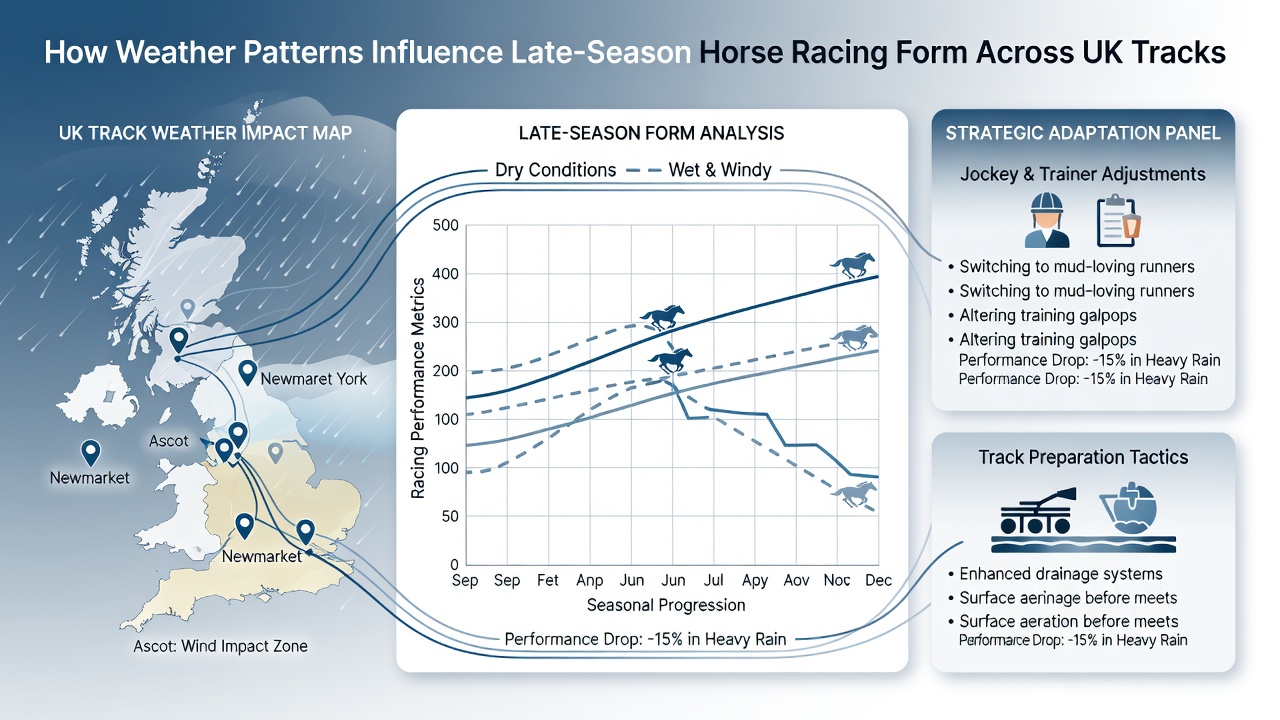
Historical race results from 2023 through 2025 demonstrate clear patterns where late-season winners disproportionately come from stables that prioritize versatile runners capable of handling multiple ground states. These trends hold across both flat and jumps disciplines, though jumps meetings amplify the effects because obstacles interact differently with softened landing areas after prolonged wet weather. According to reports issued by the Met Office, average November rainfall across key racing regions exceeded long-term norms in multiple recent years, correlating with elevated win rates for proven soft-ground performers.
Data Patterns and Performance Metrics
Performance analysts examining large datasets find that winning times lengthen by several seconds on heavy ground compared with good conditions, with the disparity most pronounced in sprints and middle-distance races. Temperature records further show that overnight frosts followed by daytime warming create deceptive surfaces that test horse adaptability more than consistent rain. Those who've compiled multi-year statistics across major fixtures observe that certain bloodlines maintain higher strike rates under these variable late-season environments, providing trainers with empirical guidance when selecting entries.
Industry organizations such as the Thoroughbred Breeders' Association have supported research into climate-related variables, and findings released through academic equine programs highlight how drainage infrastructure at individual tracks modulates the speed at which conditions shift following weather events. This infrastructure difference explains why some courses maintain more stable going reports despite identical regional rainfall.
Conclusion
Weather-driven changes in ground conditions continue to shape late-season form across UK tracks through established mechanisms of moisture retention, temperature effects, and wind exposure. Track records, sectional data, and meteorological correlations supply objective evidence that these factors alter horse suitability and race dynamics in measurable ways. Trainers and analysts relying on historical patterns alongside current forecasts maintain structured approaches to entry selection that account for these recurring influences.