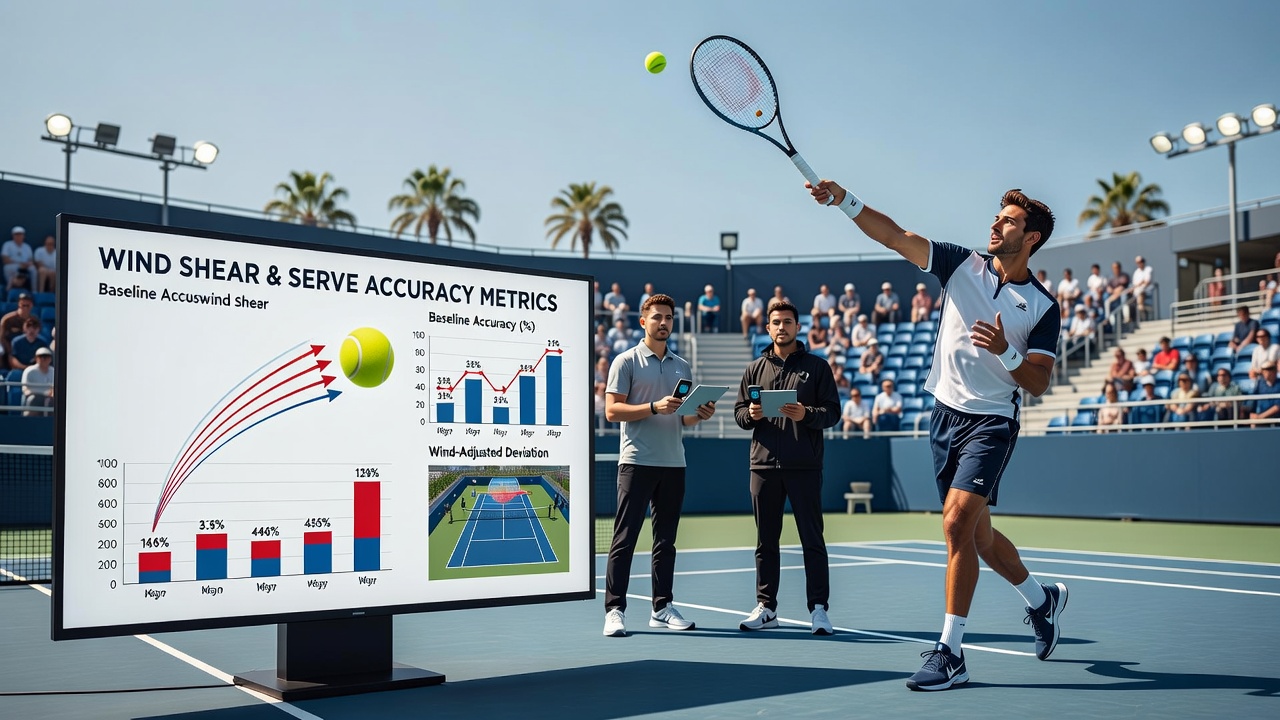
Wind Shear Patterns and Their Measurable Influence on Serve Precision During Outdoor Professional Tennis Events
Outdoor tennis tournaments expose players to variable atmospheric conditions that alter ball flight characteristics, and wind shear represents one key factor measured through serve accuracy metrics at major events. Wind shear occurs when wind speed and direction change across different altitudes above the court surface, creating uneven forces on the tennis ball during its trajectory from racket contact to landing. Researchers tracking these variations note that serve placement success rates decline when shear gradients exceed typical thresholds recorded at venues such as those hosting grass and hard court competitions in June 2026.
Defining Wind Shear in Court-Level Environments
Wind shear develops through interactions between surface friction, temperature gradients, and larger scale weather systems, producing layers of air moving at different velocities. Meteorologists collect data using anemometers positioned at multiple heights around stadium perimeters, and these readings feed into models that predict ball deviation during high-speed serves. Studies from sports science laboratories indicate that shear layers between one and three meters above ground affect the ball most significantly because this zone coincides with typical serve apex heights for professional players.
Players encounter these conditions at outdoor facilities where natural ventilation prevents full enclosure, and tournament organizers deploy weather stations to log real-time parameters alongside match statistics. Accuracy metrics derived from ball tracking systems capture in-bounds percentages, fault frequencies, and lateral displacement distances, allowing analysts to correlate environmental readings with performance outcomes across multiple matches.
Impact on Different Serve Types and Associated Metrics
Flat serves travel at higher velocities and spend less time in the air, which reduces cumulative exposure to shear forces yet leaves less margin for trajectory correction when sudden directional shifts occur. Slice serves introduce sidespin that interacts with cross-court wind components, and data logs from recent events show increased double-fault rates when shear aligns with the spin axis. Topspin serves dip more sharply due to Magnus effect amplification, and wind shear can either enhance or counteract this dip depending on whether the upper layer wind assists or opposes the forward rotation.
Statistical reviews compiled by tournament data providers reveal that first-serve percentages drop by measurable margins on days with documented shear values above three meters per second per meter of height difference. Second-serve accuracy follows similar patterns though the effect appears moderated by reduced pace and greater spin application. Analysts examining placement heat maps observe clustering of faults toward the net or wide of the service box when vertical wind gradients intensify during afternoon sessions.
Data Collection Methods and Tournament Applications
Ball tracking technology installed at ATP and WTA events records three-dimensional trajectories at high frame rates, supplying precise coordinates that researchers overlay with concurrent wind profile measurements. These combined datasets enable calculation of expected versus observed landing positions, isolating shear contributions from other variables such as player fatigue or court surface friction. International governing bodies maintain archives of such integrated records to support equipment regulations and scheduling decisions for outdoor fixtures.
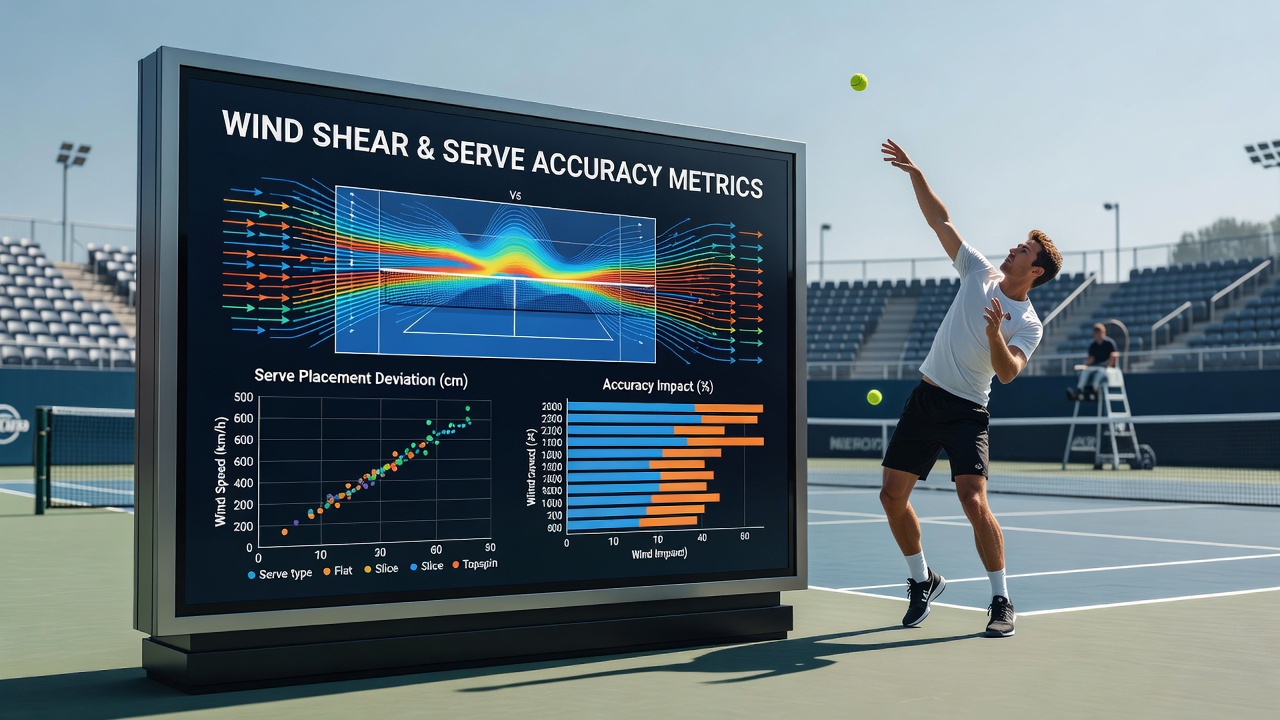
Coaches review these metrics during post-match debriefs to adjust grip selections, stance alignments, and target zones for upcoming outdoor rounds. One study published through university sports engineering programs demonstrated that predictive adjustments based on pre-match wind shear forecasts improved in-bounds serve rates by several percentage points among participants who received the information. Tournament directors meanwhile use aggregated figures to evaluate whether match start times should shift earlier or later to minimize peak shear periods associated with thermal mixing in the boundary layer.
Geographic and Seasonal Variations Observed in 2026 Events
European grass court tournaments scheduled around late June 2026 often coincide with transitional weather patterns featuring gusty conditions that amplify shear near sea-level venues. North American hard court events experience different profiles driven by continental airflow patterns, and comparative analyses show distinct fault distributions tied to regional climatology. Southern Hemisphere summer tournaments provide additional datasets where reversed seasonal wind regimes produce contrasting shear signatures during equivalent calendar periods.
Long-term records maintained by national meteorological services document recurring shear maxima during specific diurnal windows, and these patterns inform both player preparation routines and broadcast graphics that display live environmental overlays. Observers note that venues with partial stadium roofing experience localized acceleration of shear effects along open sightlines, further complicating consistent serve execution across different sections of the same court.
Conclusion
Integrated analysis of wind shear profiles alongside serve accuracy metrics supplies tournament stakeholders with actionable environmental intelligence that supports performance optimization and scheduling refinements. Continued refinement of measurement techniques and data fusion methods promises clearer quantification of these atmospheric influences across future outdoor competitions worldwide.